
Geneviève Claisse (1935-2018)
H Nad, 1971
Acrylic on canvas
100 x 100 cm
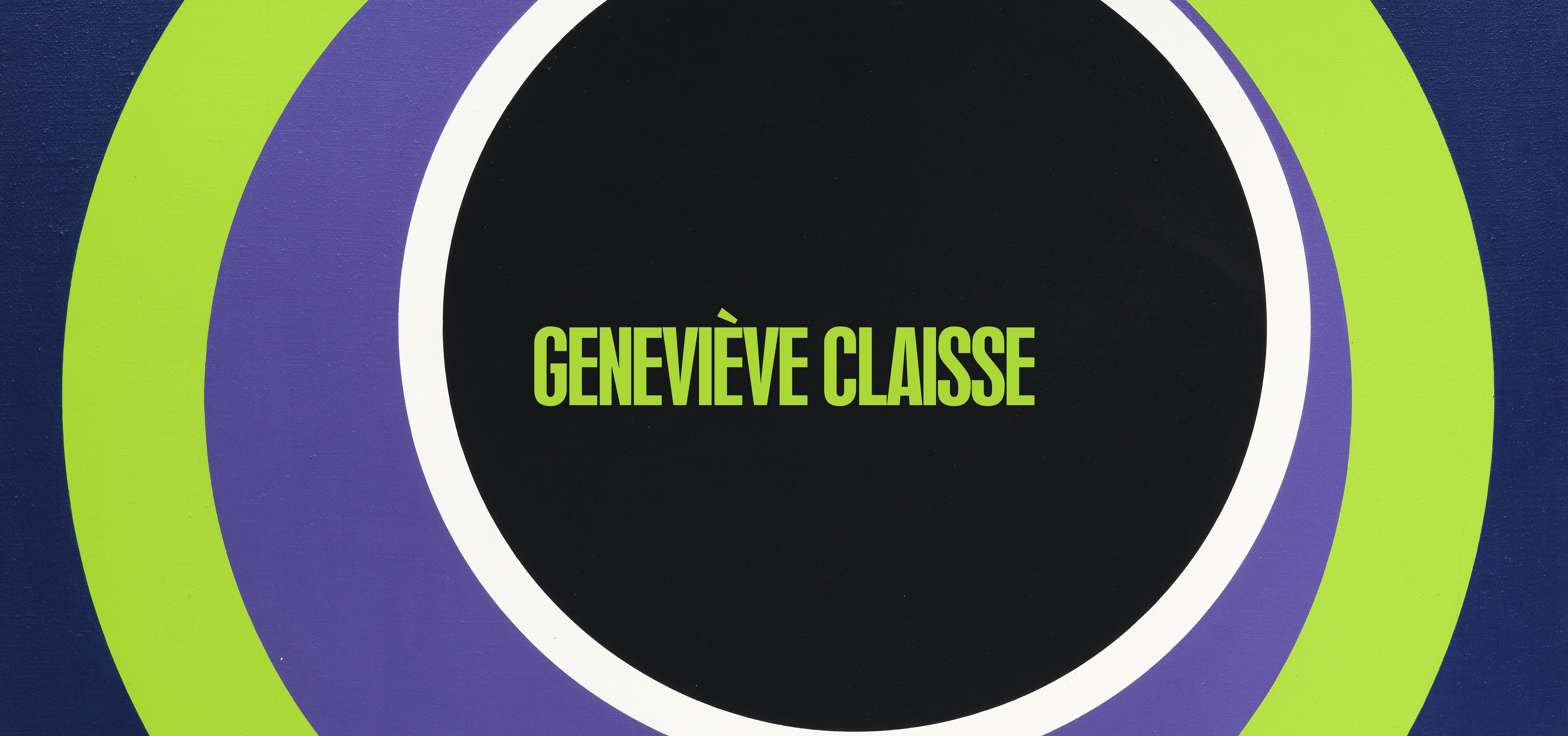
H Nad, 1971
8-28 February 2026In Geneviève Claisse’s work, the circle has played an essential role since the early 1960s. In H Nad, Claisse demonstrates that geometric simplicity can give rise to great perceptual complexity. From a perfect square containing four superimposed circles, she explores the expressive power of geometric shapes transformed by the intensity and relationships between colors.
Claisse developed abstraction as her exclusive language at a very early age. Without going through the figurative stages traditionally associated with the artistic training of her peers, she states: “I found in abstraction the natural way to express the world.”
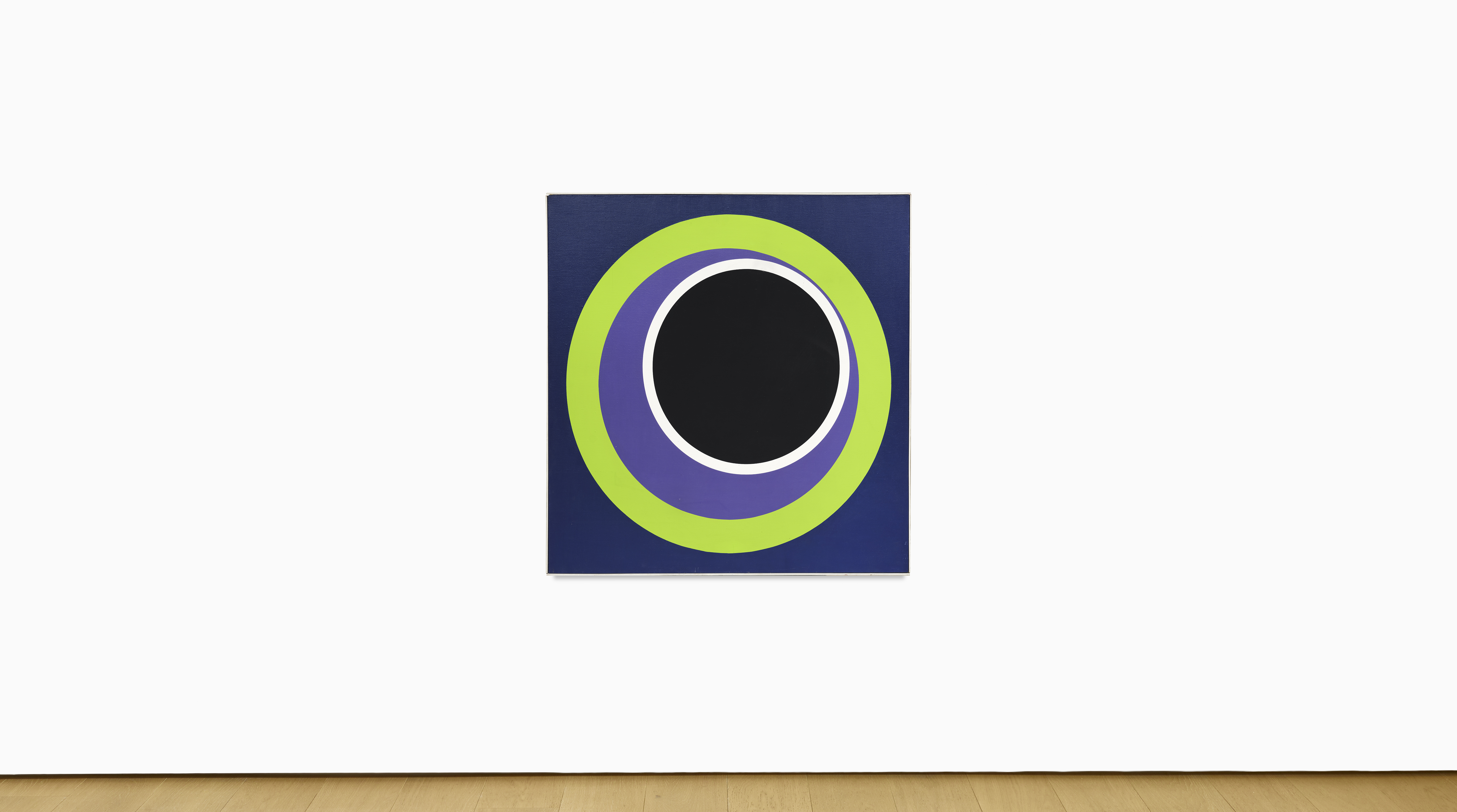
The work is presented on a perfectly square support, a stable and rational shape, which accommodates four superimposed circles. The first two are rigorously centered on the canvas, while the other two, sharing the same epicenter, shift slightly toward the northeast corner.
This arrangement creates an interlocking system that structures the space with great purity. The square acts as a strict, almost architectural frame within which the circular dynamic can unfold and circulate freely.
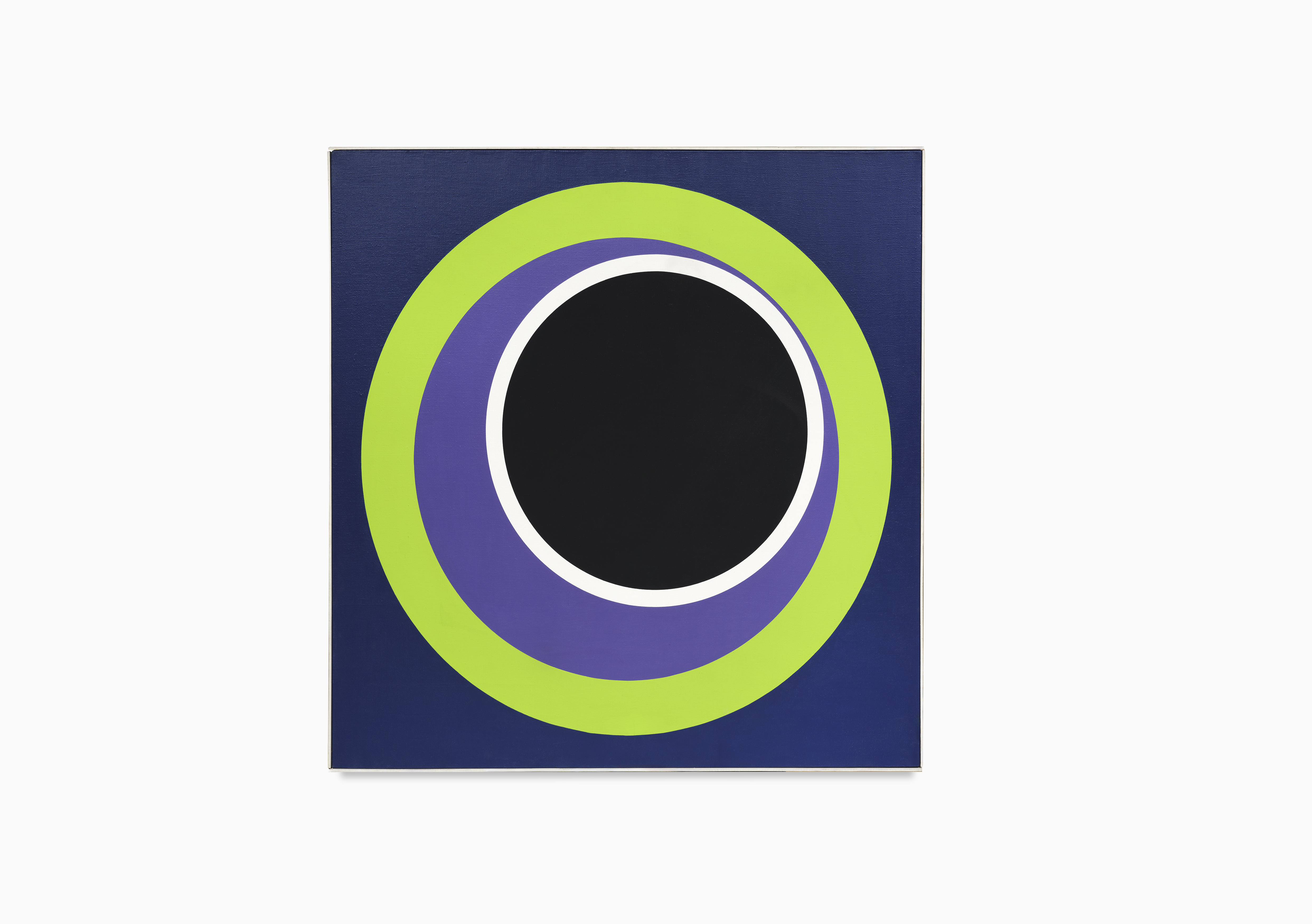

Although the work is geometrically stable, it is not static. Claisse’s research into optical and kinetic effects applied to surfaces is clearly evident here. The colors seem to vibrate, particularly the green, which takes on a neon-like quality, sparkling and radiant. The eye is drawn to the center and then pushed outward. This slight pulsating effect creates optical kineticism without any actual movement. The juxtaposition of pure colors creates an intense optical effect. The circles seem to be animated by an internal movement and convey the attractive force of these circular structures. Their power lies in the balance between mathematics and inner sensitivity.
This work illustrates the extreme purity characteristic of Claisse’s work, which contains no narrative elements. Its expressive force rests entirely on formal rigor and chromatic sensitivity drawn directly from the artist’s unique intuition.
The palette is predominantly based on cool colors: blue, green, and purple. Yet an unexpected warmth radiates from the painting. The royal blue gives the overall composition a solemn depth, like the color of the sky at dusk. Dense and enveloping, it creates a sober and meditative atmosphere. The green, placed between the blue and purple in the superimposed circles, plays an essential role. It breaks up the overall composition and introduces an unexpected vibration. Its acidity brightens the shade of midnight blue and softens the purple. The bold green-purple combination forms the heart of the composition here. White opens up the space, bringing breath and light. Black anchors the composition, giving it depth and gravity. This alternation creates a controlled tension between expansion and concentration.
A chromatic analysis sheds light on the internal logic of the work and the harmony of this color combination. Blue is a primary color, with purple and green as its secondary colors. Green is composed of blue and yellow, which is the complementary color of purple. By incorporating this electric yellow-green, Claisse subtly introduces the complementary nature of purple without having to use pure yellow. Green then becomes a mediator that connects the blue background and interacts with purple. It brings freshness and energy to the entire composition. The placement of green between blue and purple in the superimposition is therefore not insignificant. It visually materializes this chromatic transition while harmonizing the entire work.
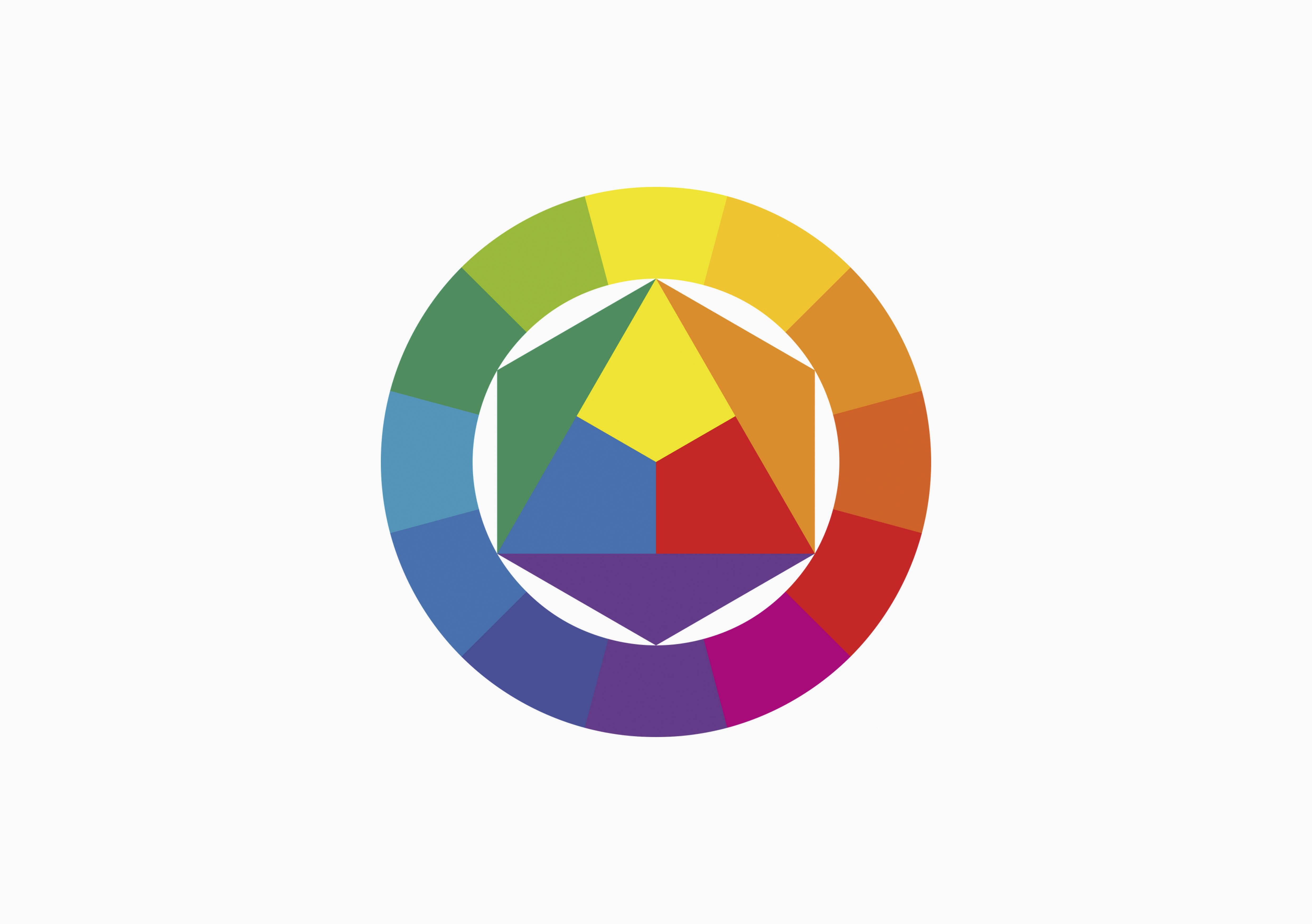
Chromatic circle: primary, secondary and tertiary colors
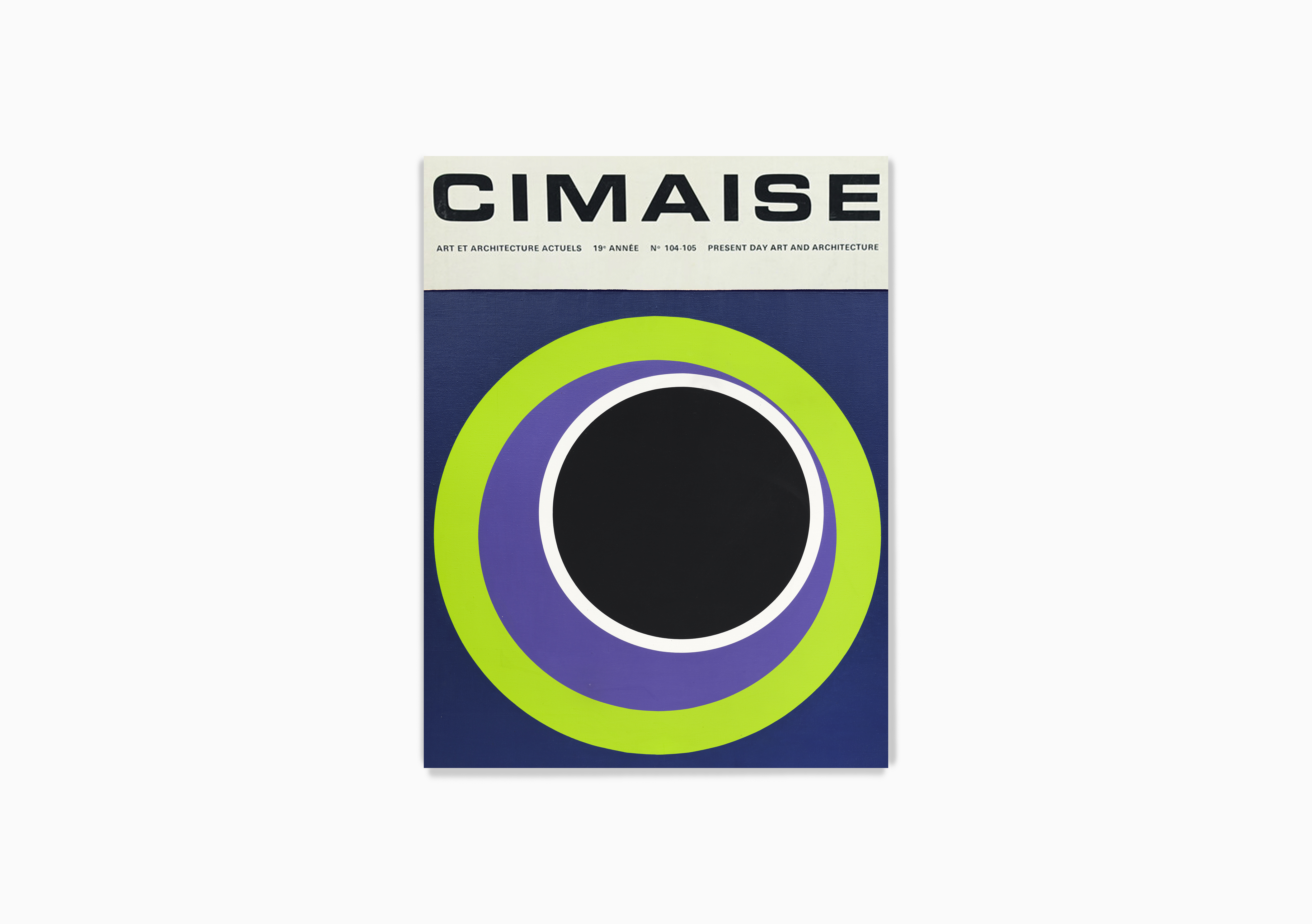
The circle is thus complete: in her youth, Geneviève Claisse had developed a habit of reading magazines such as Art d’Aujourd’hui and Cimaise. A publication committed to defending abstract art, Cimaise bears witness to the importance of this formal research in the contemporary artistic context and, through its choice of cover, highlights the institutional recognition of Claisse’s work.
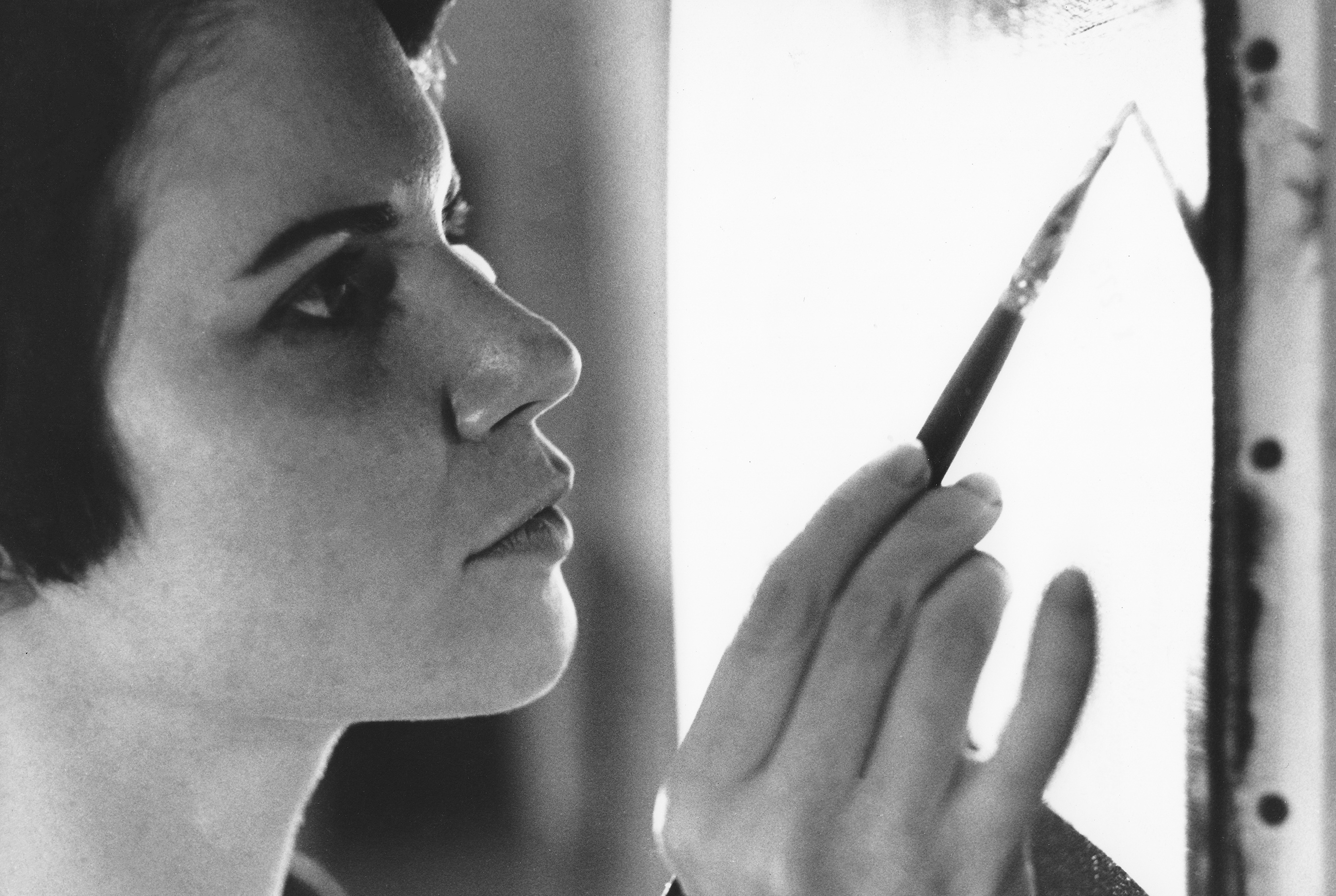
Geneviève Claisse
A leading figure in geometric abstraction, Geneviève Claisse (1935–2018) was a French painter. Her rigorous and colourful work is distinguished by the clarity of its forms and an exceptional chromatic harmony, blending visual purity with formal perfection.
Learn more about the artist
Artists
- Karel Appel
- Victor Brauner
- Alberto Burri
- Alexander Calder
- Lynn Chadwick
- Geneviève Claisse
- Claudine Drai
- Jean Dubuffet
- Jorge Eduardo Eielson
- Sam Francis
- Simon Hantaï
- Hans Hartung
- Le Corbusier
- Fernand Léger
- Mao Lizi
- Georges Mathieu
- Alicia Penalba
- Serge Poliakoff
- Judit Reigl
- Jean-Paul Riopelle
- Gérard Schneider
- Pierre Soulages
- Geer van Velde
- Victor Vasarely
- Bernar Venet
- Claude Viallat
- Maria Helena Vieira da Silva