
“My real pleasure lies in artwork that is being created.”
Pol Bury
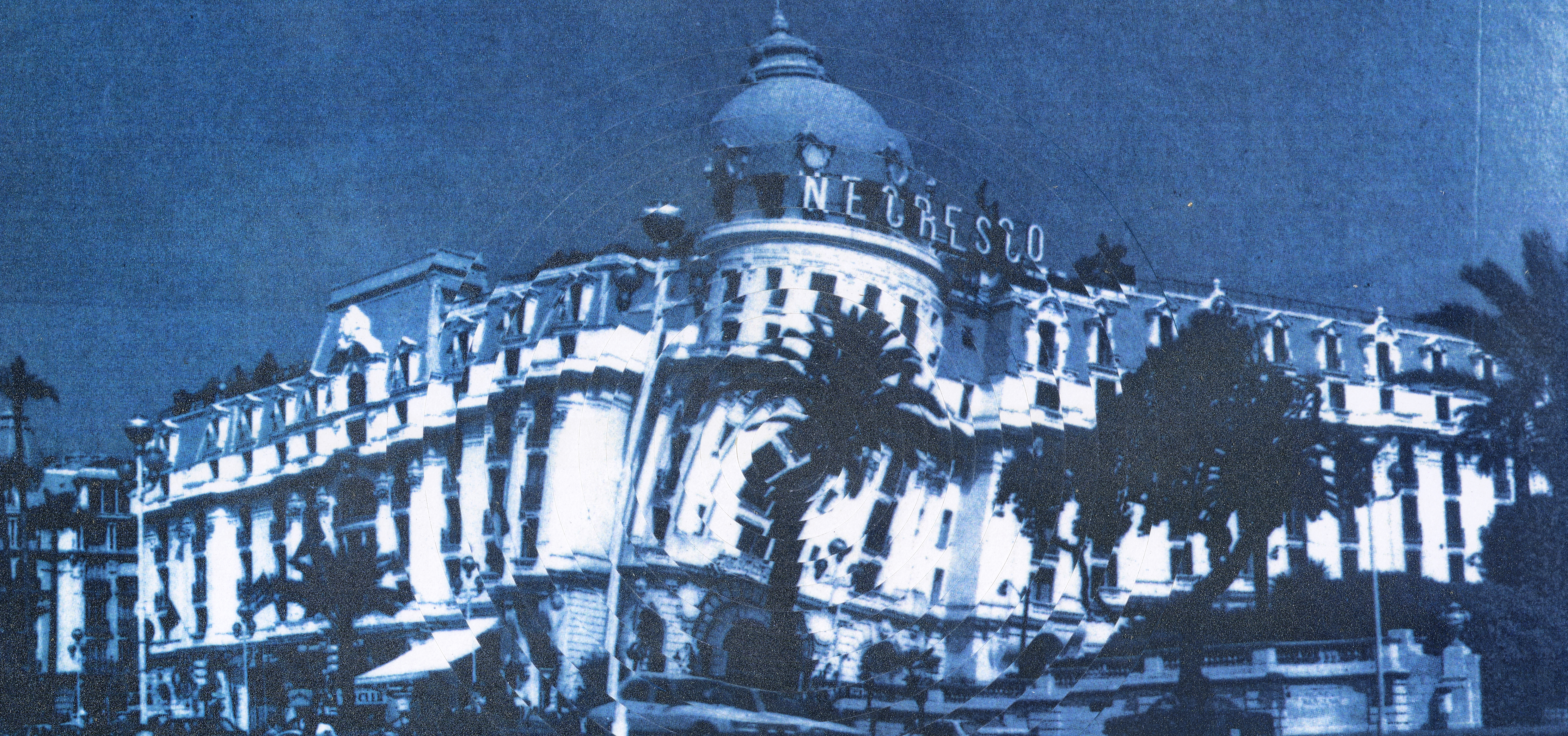
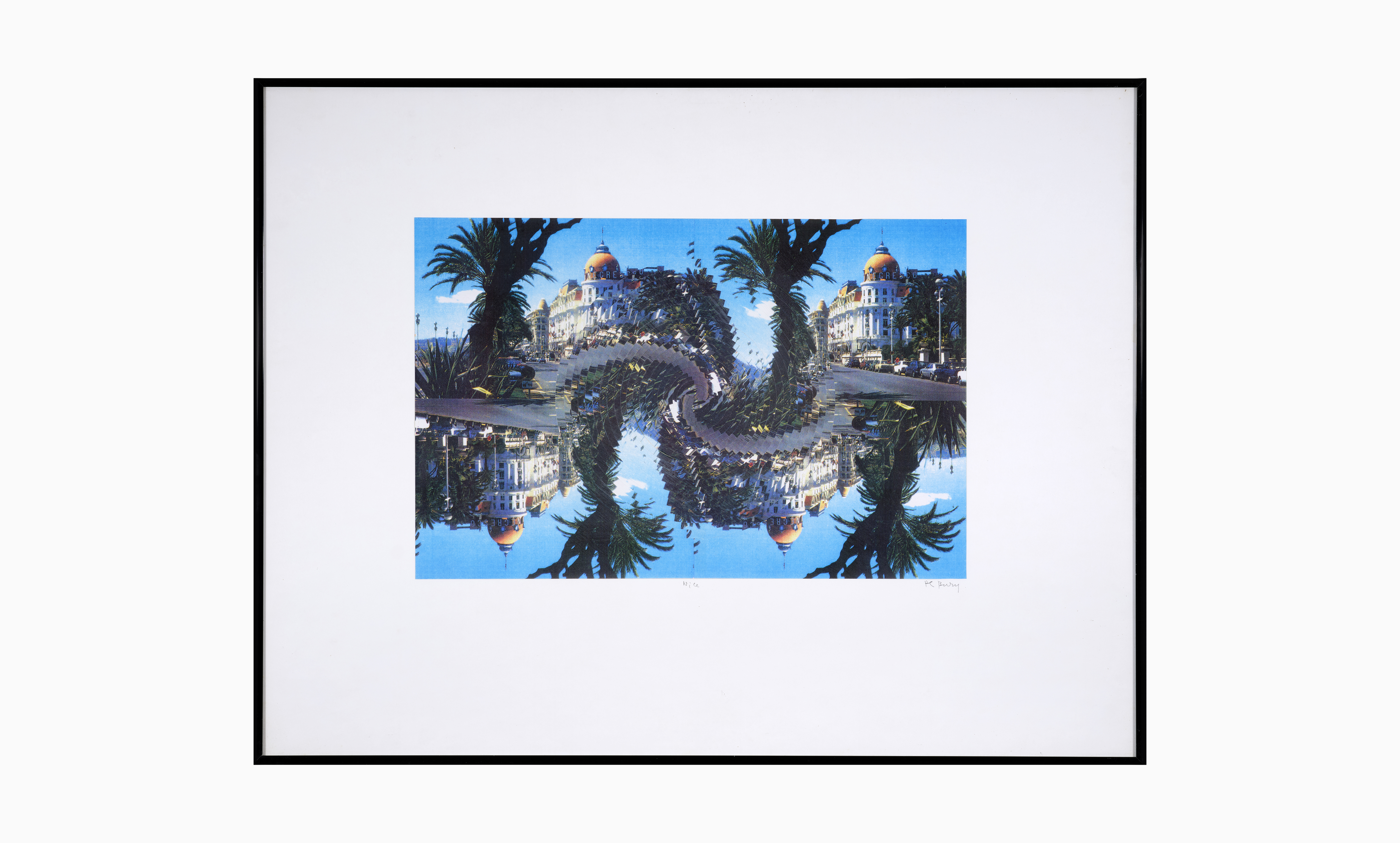
Bury, Nice, Le Negresco, 1989. Digitally printed photography, “Cinetisation” and collage Unique work
Pol Bury
Four themes from Cinétisations will be on display from the city of Nice series, presented by the gallery at the BRAFA Art Fair: The Negresco Hotel, sculpture, architecture, and finally, palm trees.
With his Cinétisations, which he began in 1963, Pol Bury transposes his exploration of movement by cutting photographs of architecture or monuments into thin circular strips using a compass, which he then reassembles with subtle shifts. Although the subjects are repeated, each cinétisation is unique.
He creates compositions that seem to undulate, bend, or waver on themselves. These images, between stability and distortion, open up a new visual field where the immobile becomes moving, revealing Bury’s ability to infuse kinetics even into the heart of the still image.
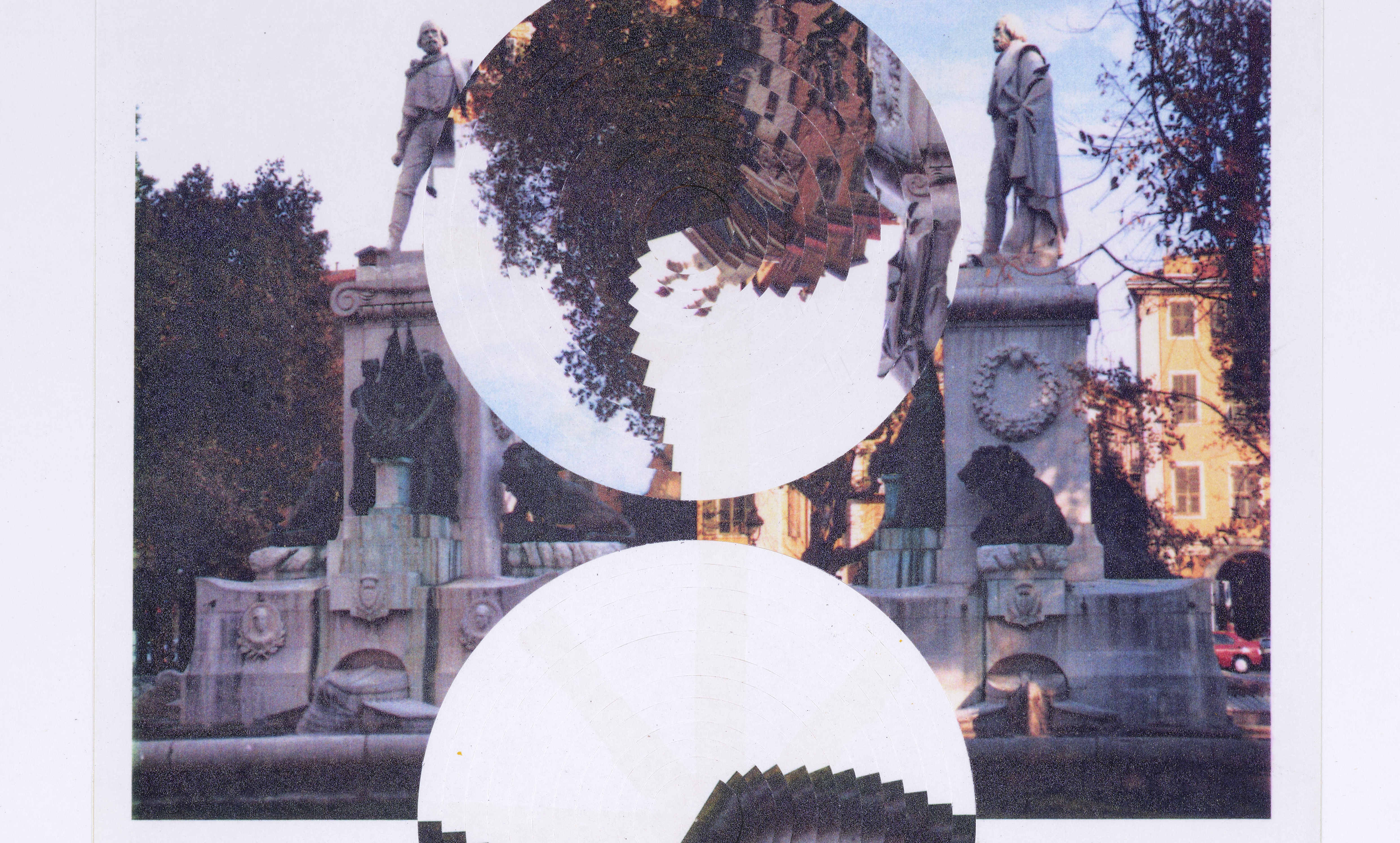
Bury, Nice, Place Garibaldi, 1989. (Detail) Photography, digital print, “Cinetisation” and collage. Unique work.
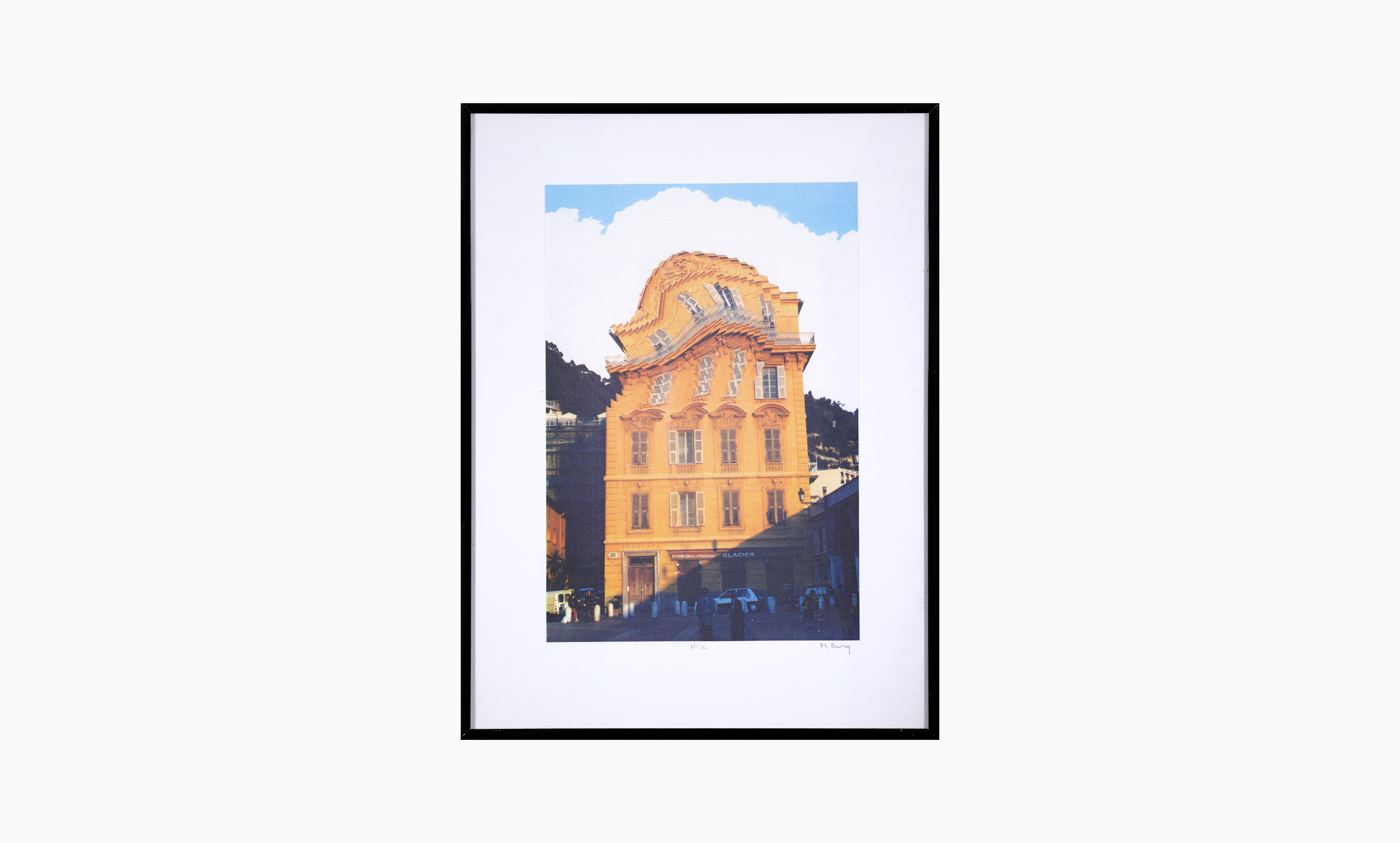
Pol Bury, Nice, Maison de Matisse, 1989. Photography, digital print, “Cinetisation” and collage. Unique work
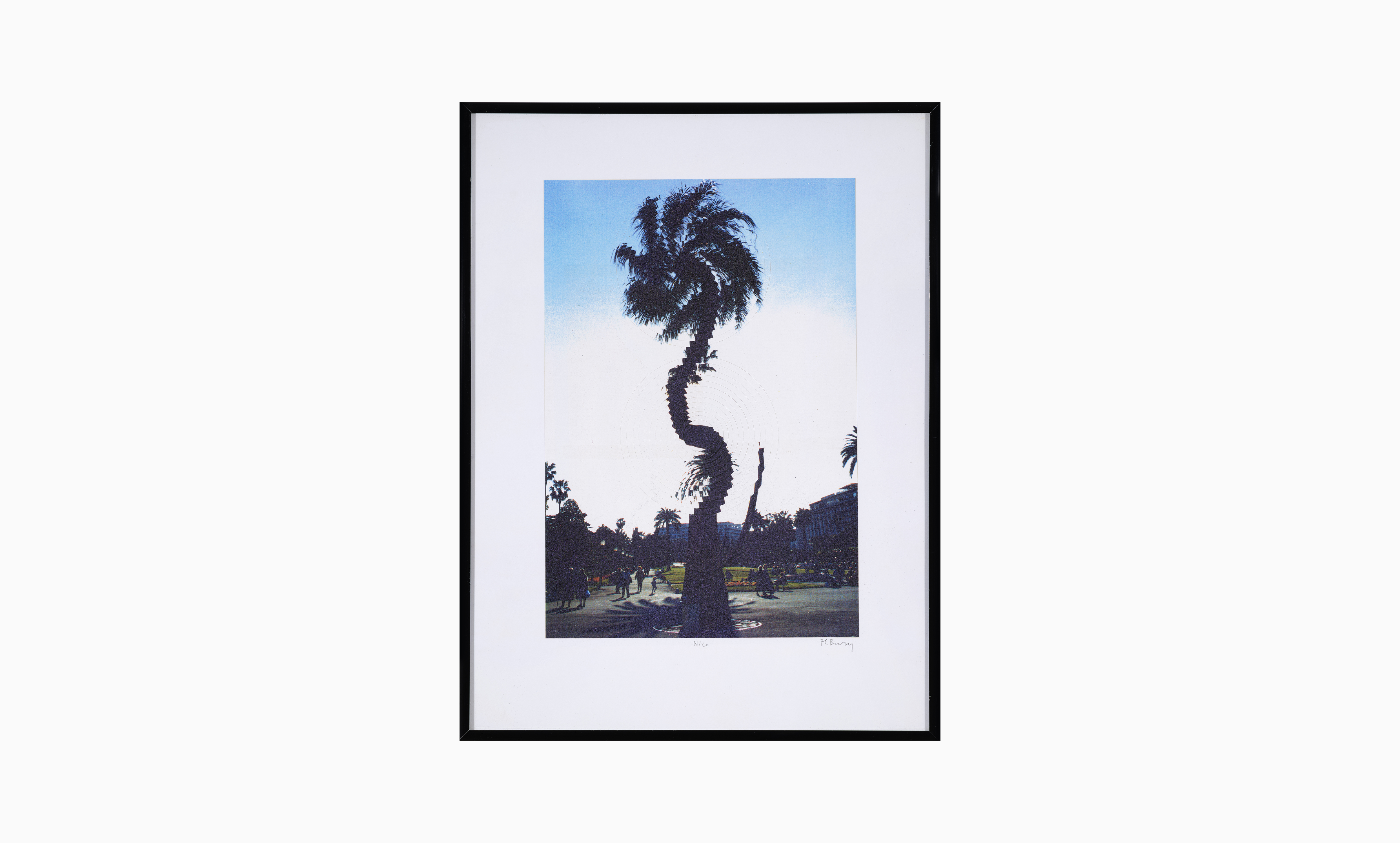
Pol Bury, Nice, Palmier, 1989. Photography, digital print, “Cinetisation” and collage. Unique work.
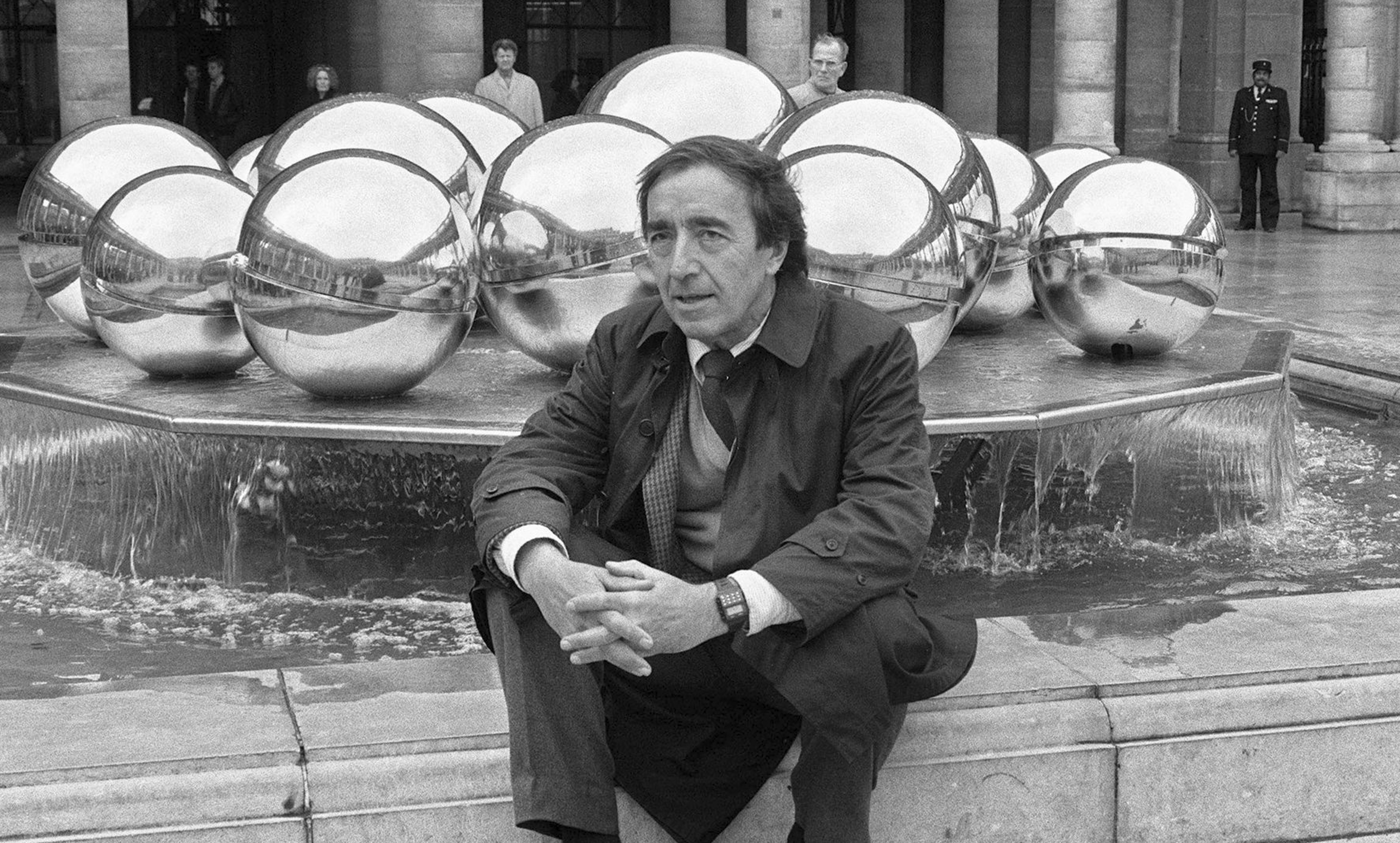
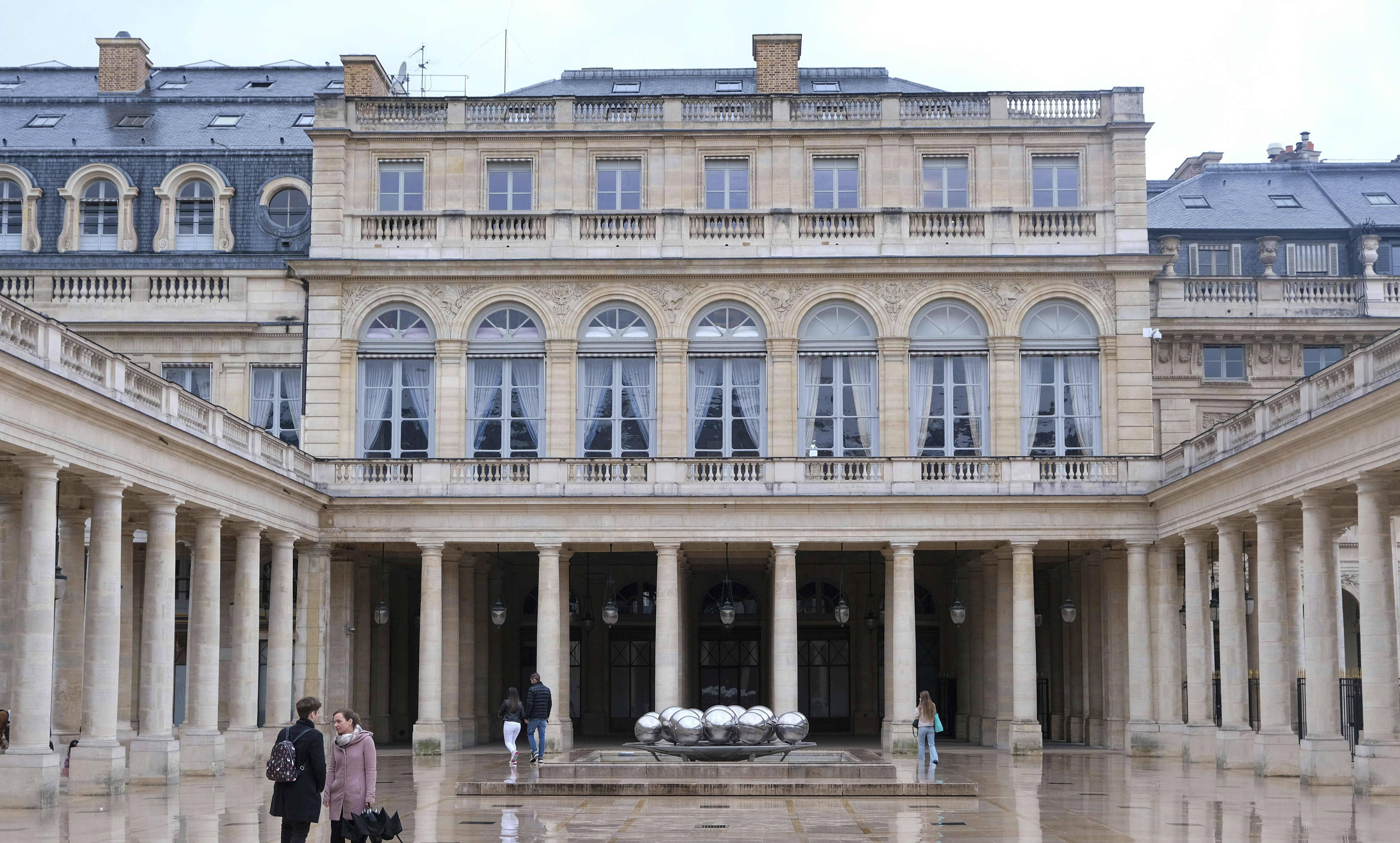
Pol Bury, born on April 26, 1922, in Haine-Saint-Pierre, Belgium and died on September 28, 2005, in Paris, was a Belgian artist recognized as one of the major figures of 20th-century kinetic art. He began his artistic career in surrealism and was a member of the CoBrA group before moving on to pure abstraction and then, in the 1950s, to animated sculpture, influenced by Alexander Calder’s mobiles. He took part in the famous Le Mouvement exhibition at the Denise René gallery. He also created numerous monumental sculptures and kinetic fountains installed in public spaces, notably in the gardens of the Palais Royal in Paris and in front of the Guggenheim Museum in New York.
Representing Belgium at the Venice Biennale in 1964, Pol Bury is now acclaimed for the poetic dimension of his work on movement and visual perception.