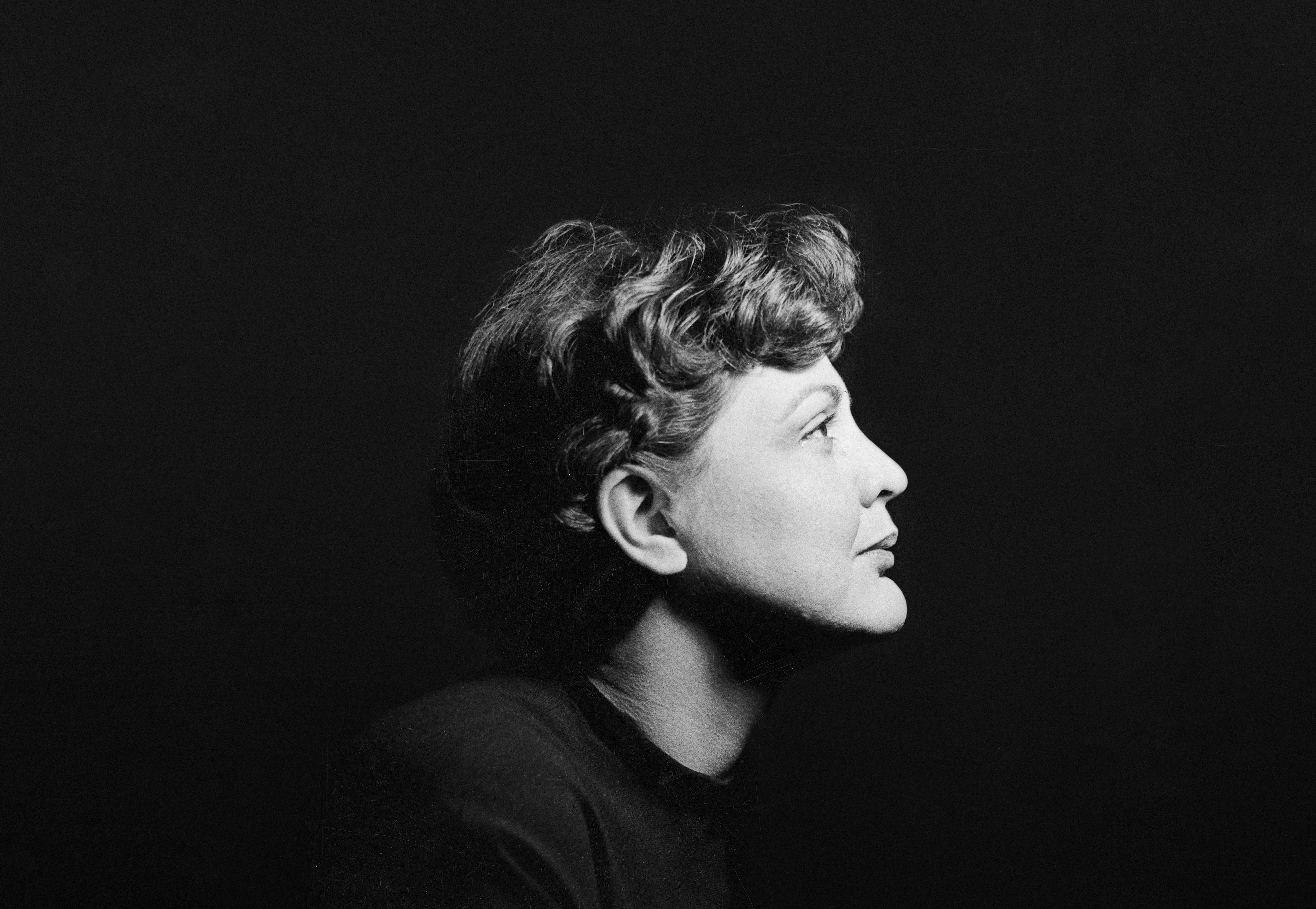
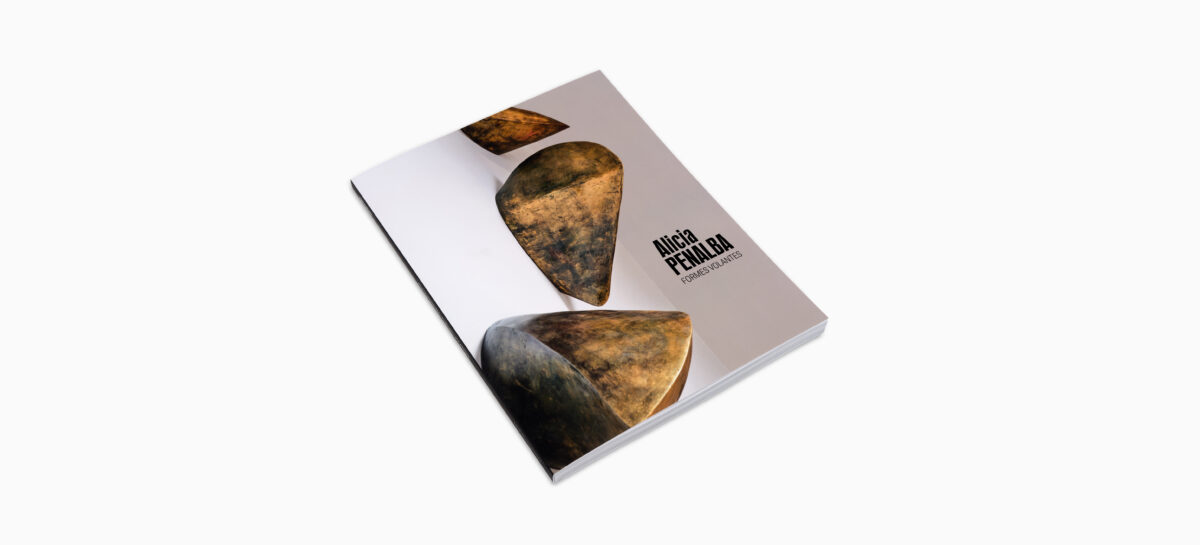
Alicia Penalba (1913-1982)
Formes volantes, Relief ou Grand Relief for Saint-Gobain, 1960
Fiberglass and polyester guilde with leaf and patina
Dimensions and positions varies
Unique installation referenced by Alicia Penalba Estate
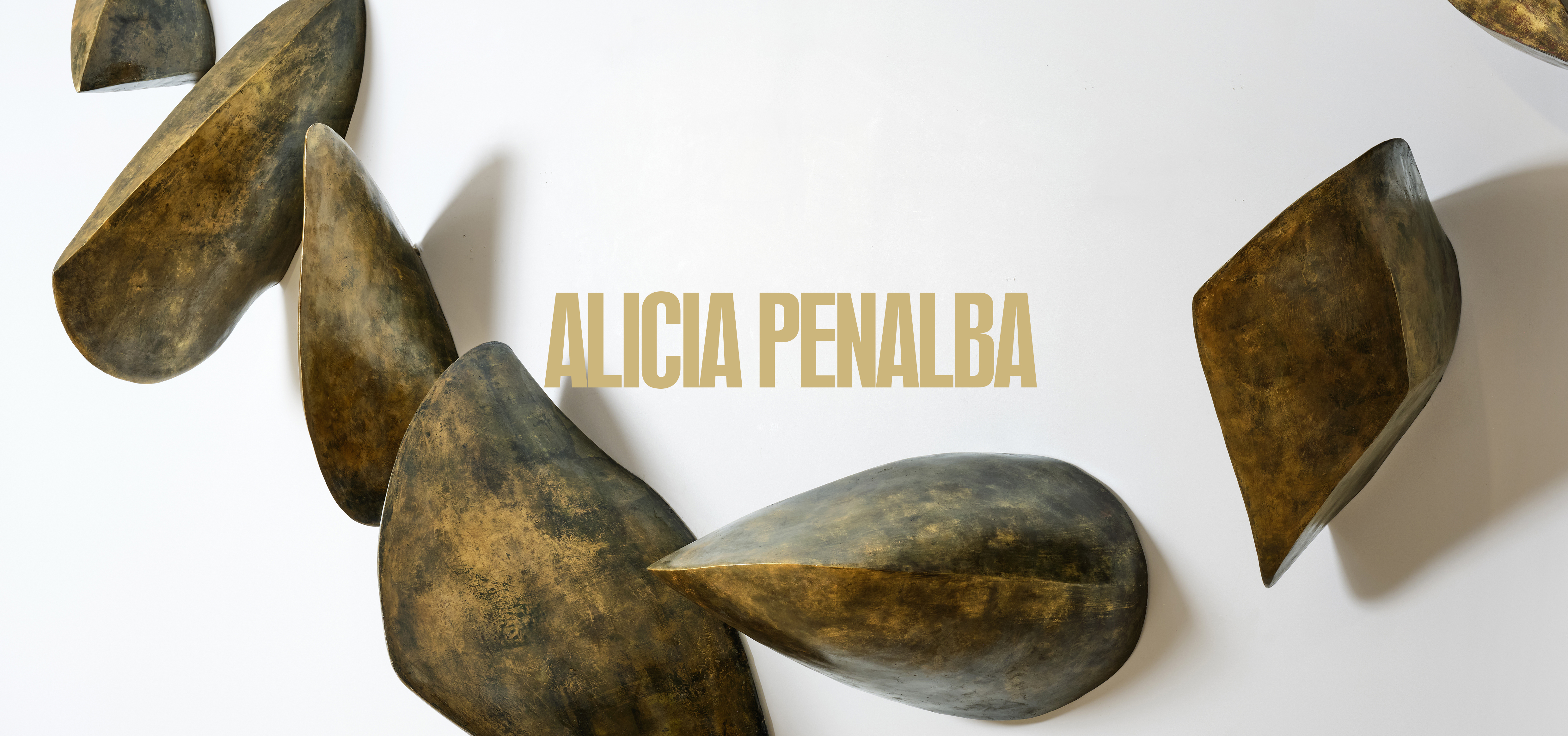
The sculpture was a centerpiece during the traveling retrospective exhibition Alicia Penalba in 1964-1965 at the Kröller-Müller Museum in Otterlo, Stedelijk van Abbemuseum in Eindhoven and Städtisches Museum in Leverkusen.
Formes volantes is composed of fiberglass and polyester gilded with leaf. The ensemble forms a mural composition where the elements seem to float. The forms are abstract, organic and evoke at the same time natural fragments (shells, boulders, petals…) and dynamic entities in movement. Their arrangement creates an effect of suspension and flight. A fundamental aspect of this work resided in the notion of “detached forms”. Contrary to traditional sculpture, compact and anchored, Penalba fragments mass to liberate the elements in the space. As Robert Lebel explained, Penalba is “an unequaled organizer of space”.
The title Formes volantes illuminates directly the artist’s intentions. It is not merely a visual effect, but a true study around the idea of elevation and detachment. The elements seem to escape gravity, flowing in space, as if liberated from all material constraints. Through these works, the artists develop a true poem on flight, founded on movement, lightness and tension towards the heights.
If Penalba has not explicitly formulated this approach, it is nevertheless possible to distinguish a contemporary reading of her works as metaphors of emancipation. The forms that are detached, elevated and freely occupy space could be interpreted as a rupture from constraints, be they material, social or symbolic. The Formes volantes could thus incarnate a dynamic of liberation. This interpretation stays open but it enriches the comprehension of the work by underlining how much the artist’s formal question parallels a profoundly symbolic dimension.
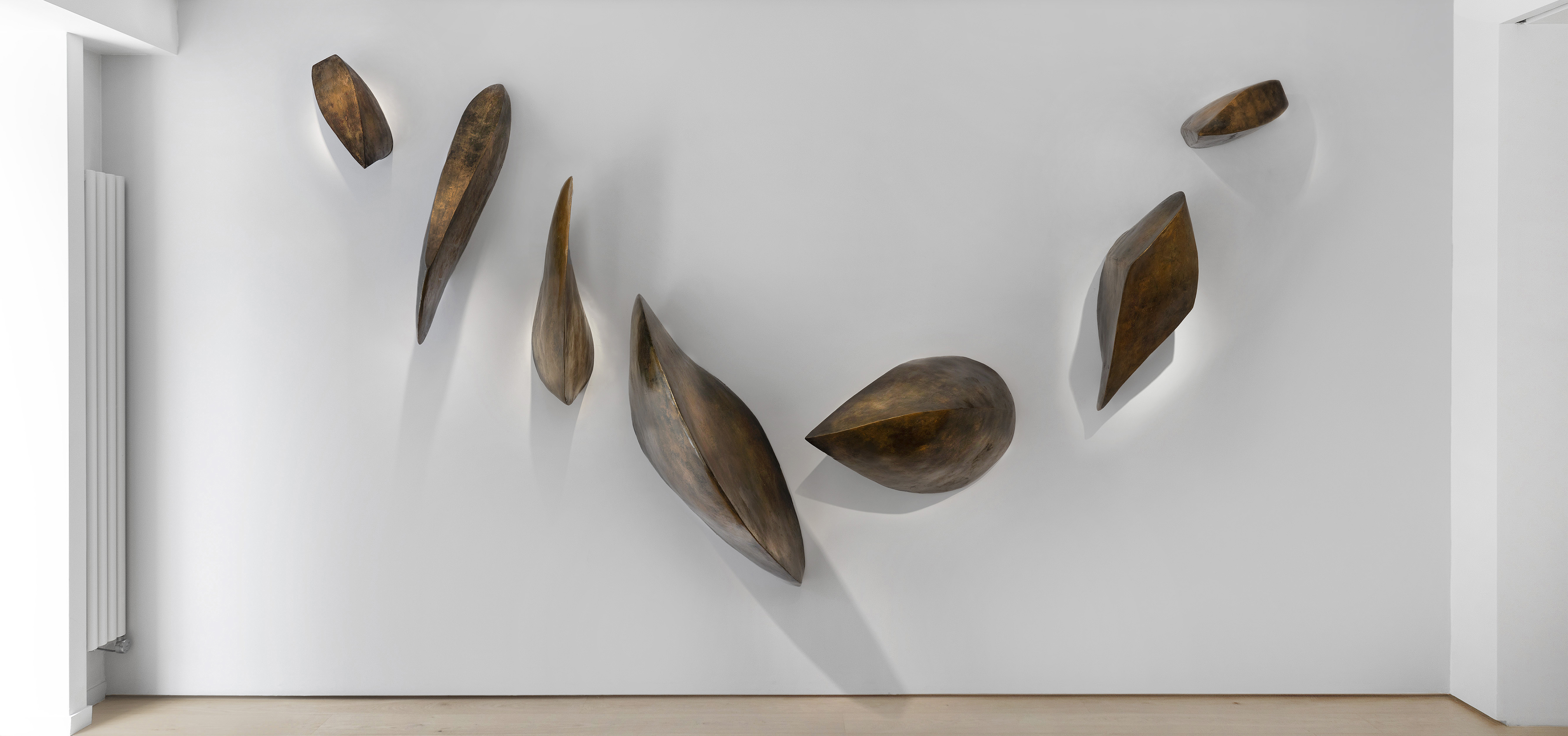
Alicia Penalba (1913-1982)
Formes volantes, Relief ou Grand Relief for Saint-Gobain, 1960
Fiberglass and polyester guilde with leaf and patina
Dimensions and positions varies
Unique installation referenced by Alicia Penalba Estate
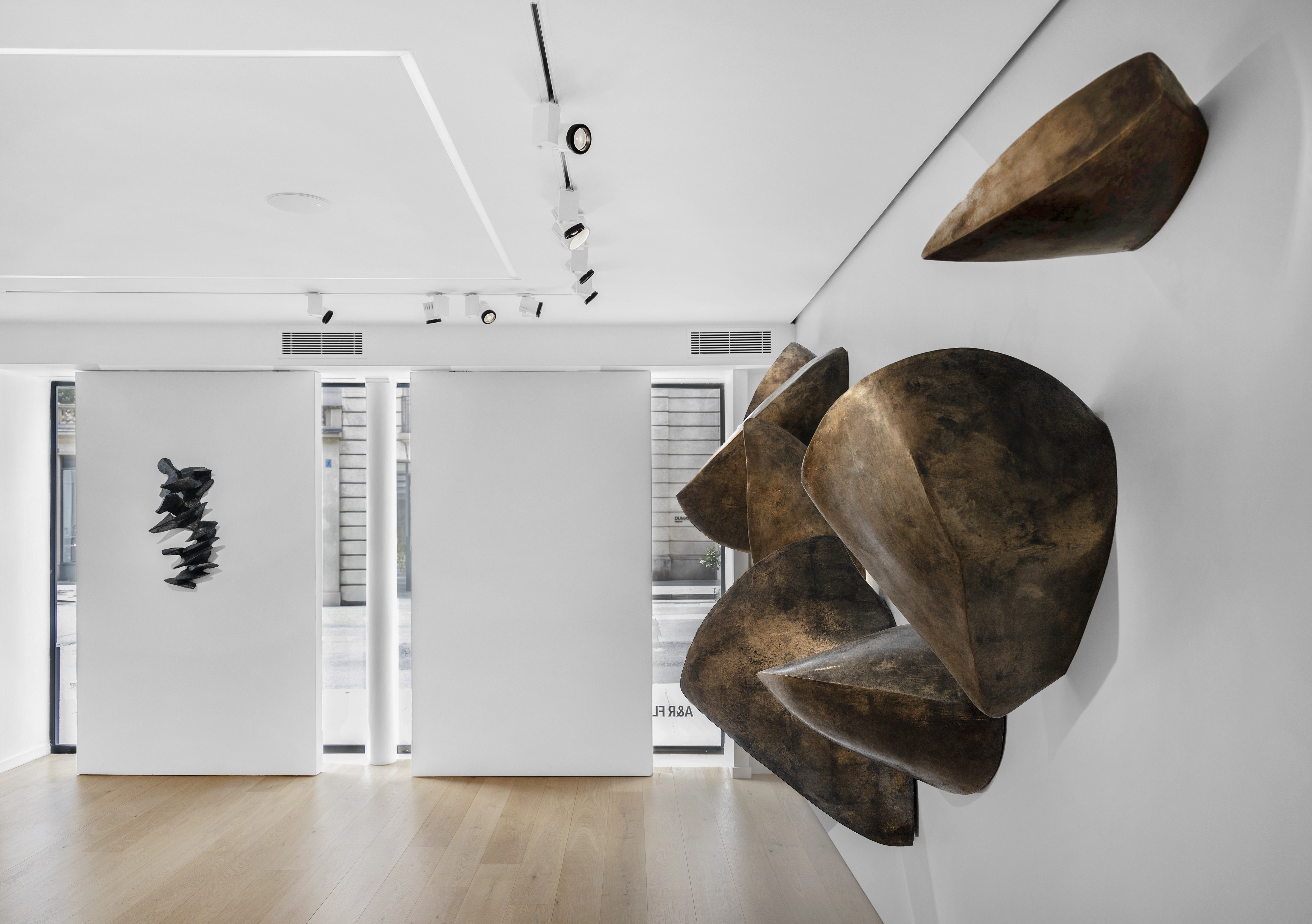
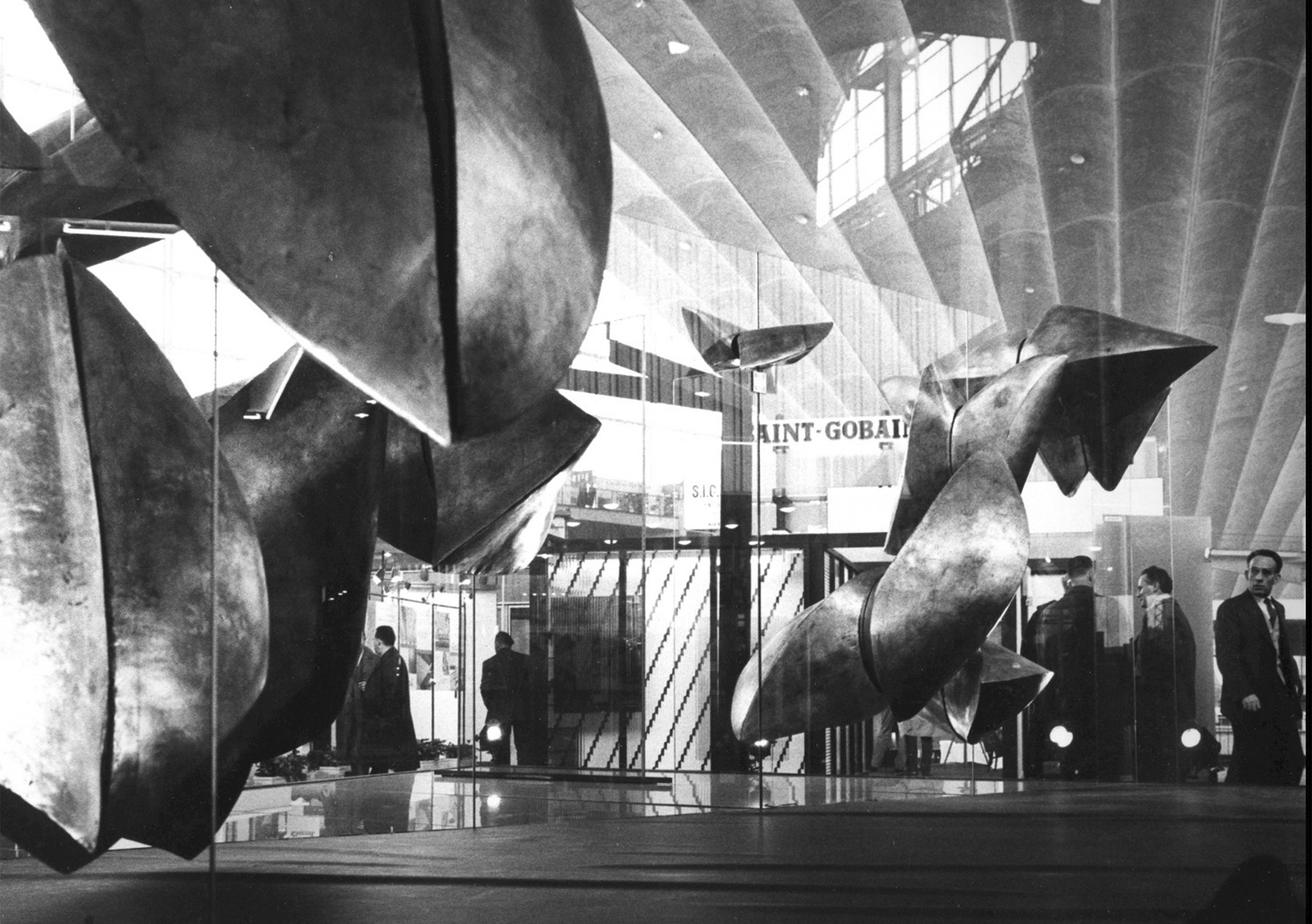
Formes volantes for the Saint-Gobain booth at the CNIT Expomat, 1960. ©Galerie A&R Fleury
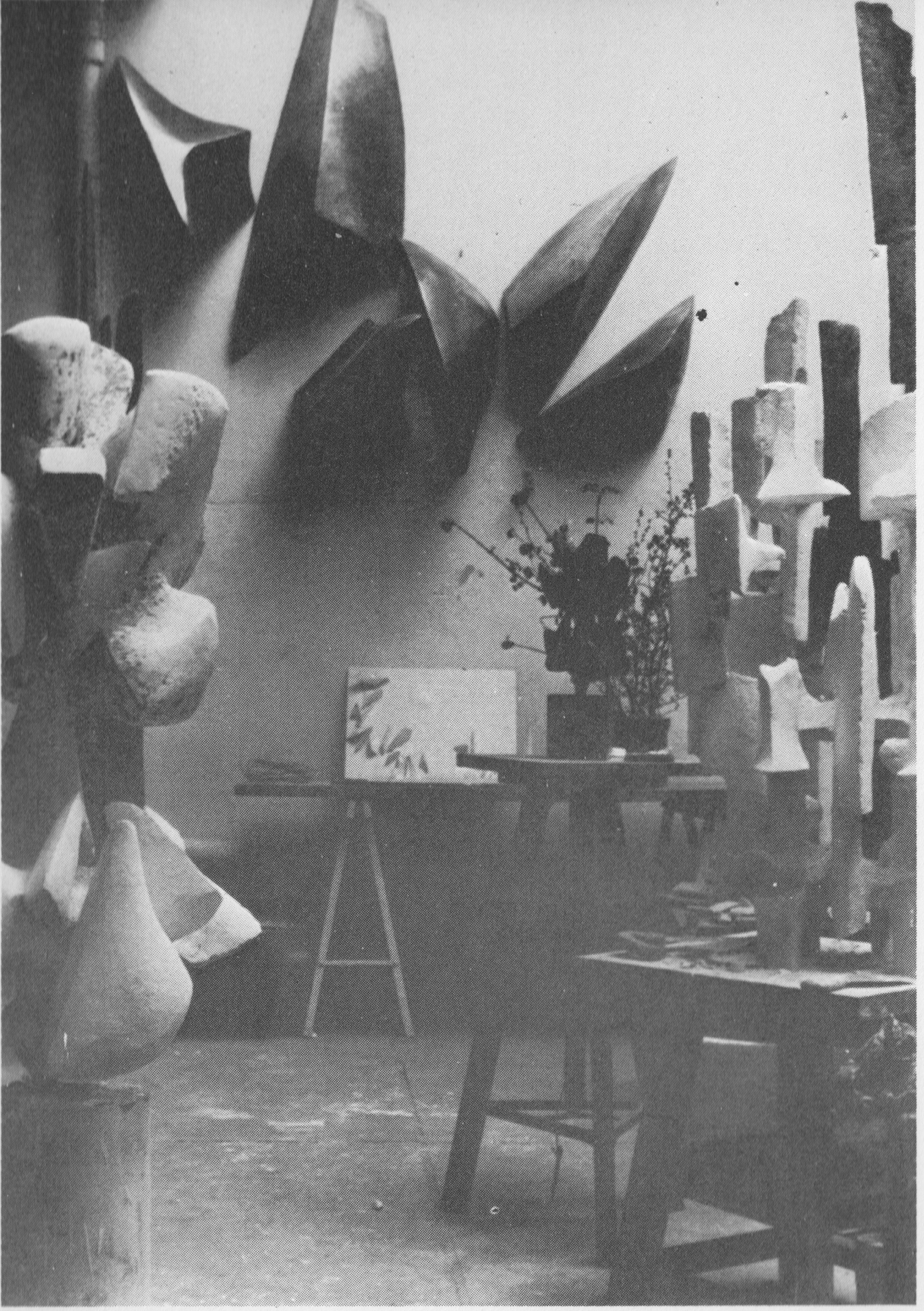
Formes volantes in Alicia Penalba's studio, rue du Roi-de-Sicile. ©Galerie A&R Fleury
Alicia Penalba
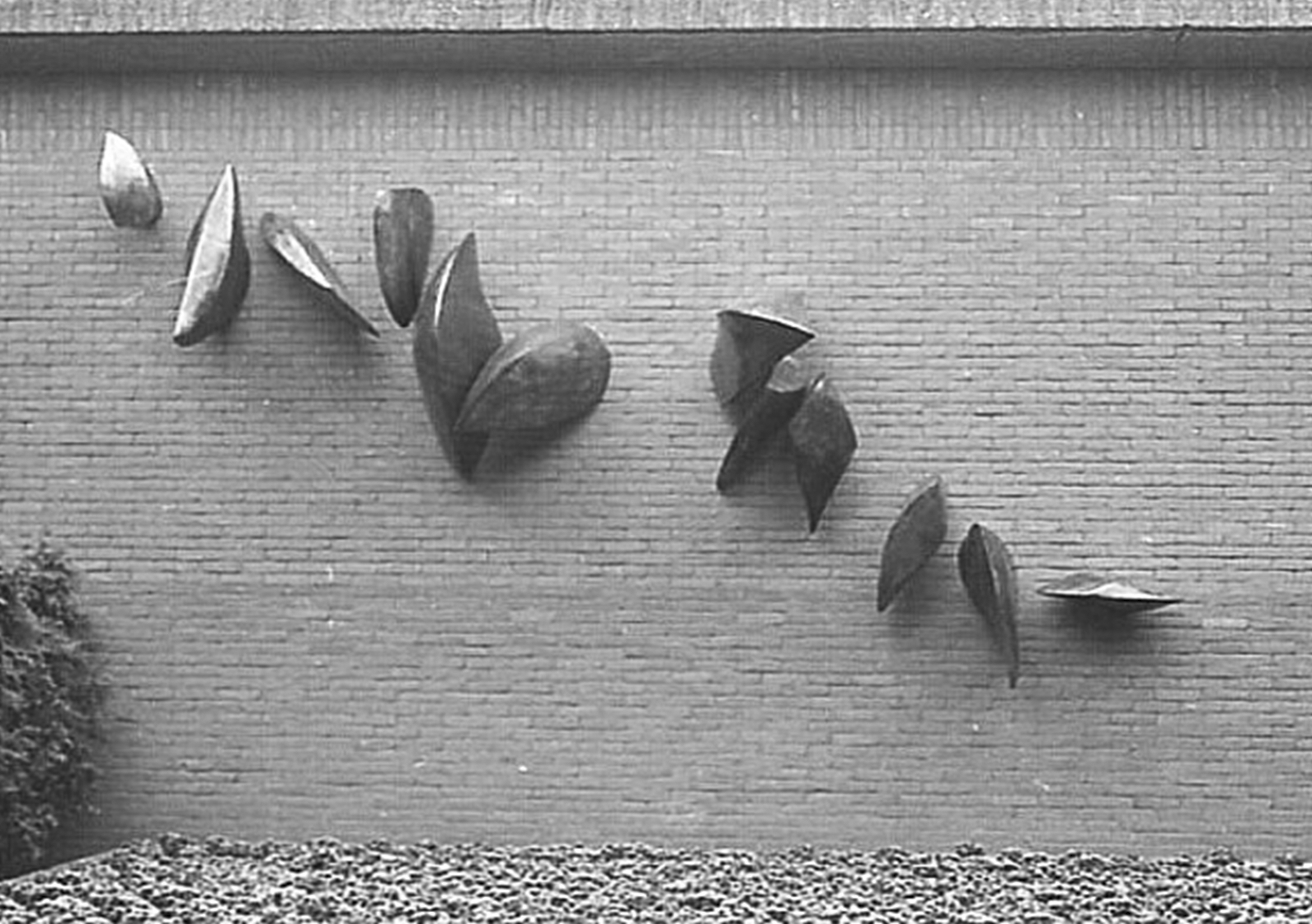
Formes volantes on the exterior wall of the Kröller-Müller Museum, Otterlo, 1964.
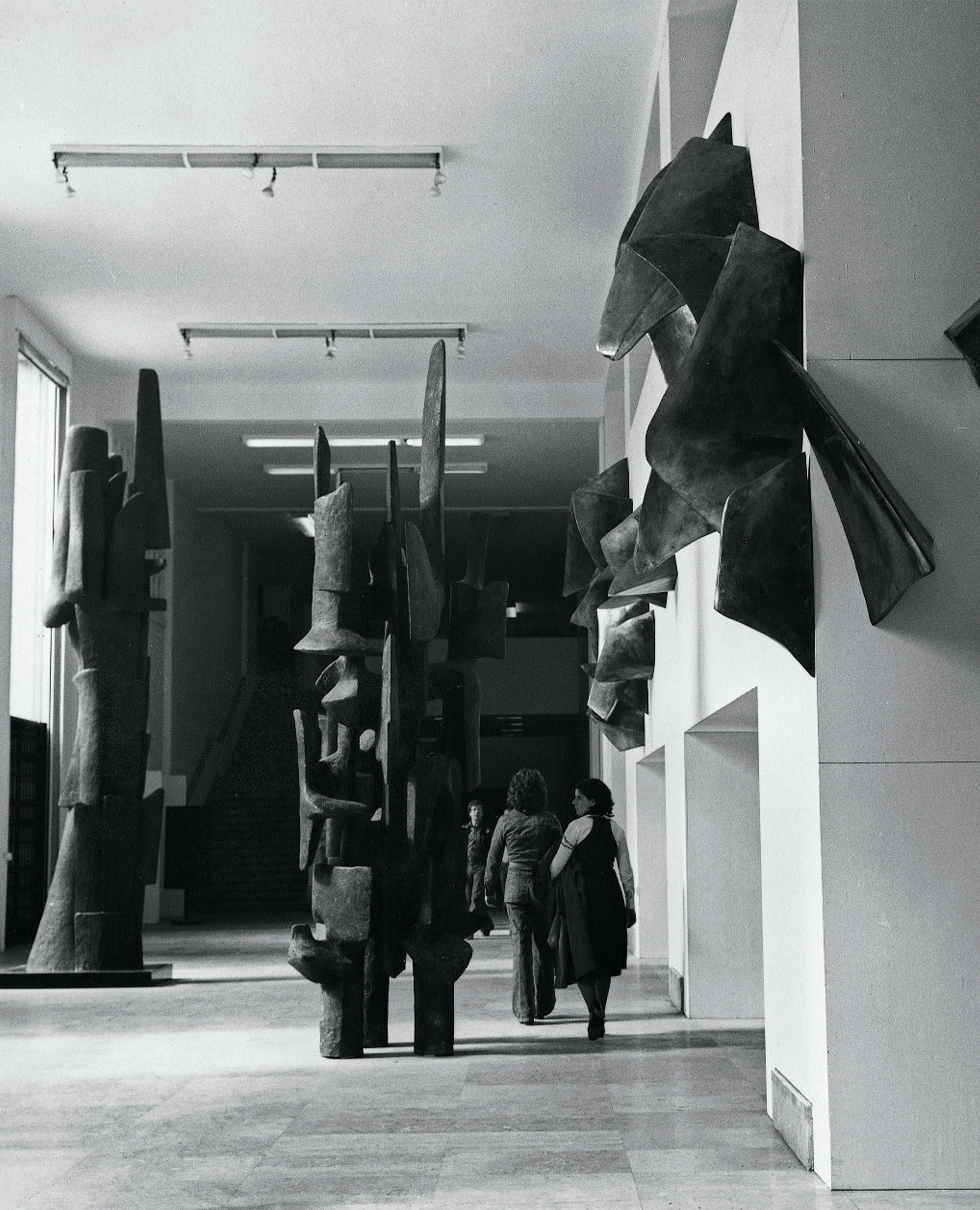
View of the exhibition “Alicia Penalba” at the Musée d'art moderne de la Ville de Paris, March-May 1977. ©Galerie A&R Fleury
Born in 1913 in Argentina, Alicia Rosario Pérez Penalba is considered to be one of the great figures of post-war sculpture. She is one of the few women sculptors of the 1950s to have achieved international recognition. Deeply marked by the memory of the wild landscapes of her childhood, Penalba carried her work simultaneously towards the fragmentation of forms, the conquest of space, and monumentality.