Serge Poliakoff (1900-1969)
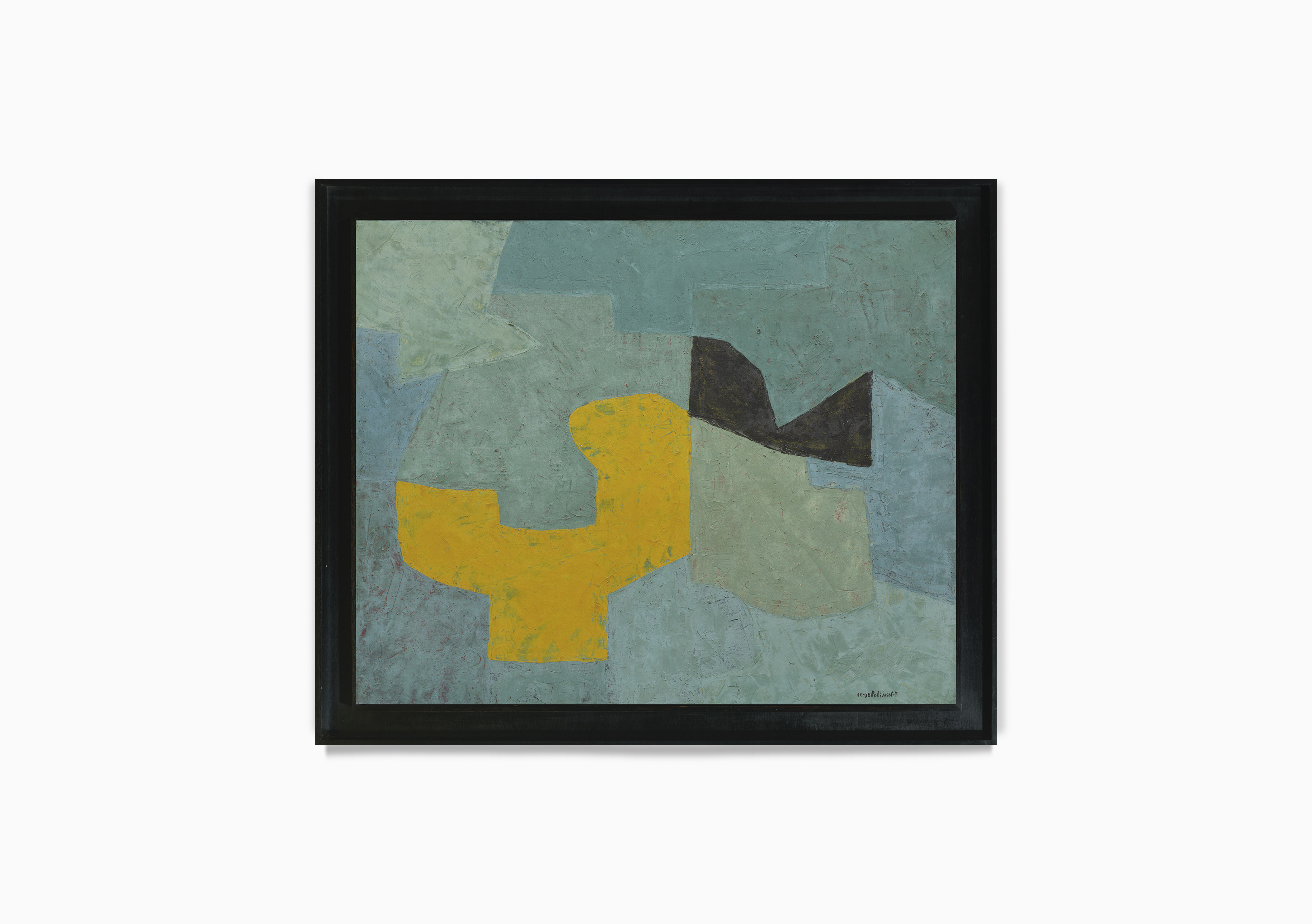
Sans titre (untitled), 1955
Oil on canvas
81 x 100 cm | 31 7/8 x 39 5/16 inches
Signed “Serge Poliakoff” on the lower right.
A true maestro of abstraction, Serge Poliakoff developed a radical style based on a unique vision of color and pictorial space. Renowned for his unparalleled ability to bring flat surfaces to life, he was celebrated by his peers from an early age, notably by Wassily Kandinsky, who, early in Poliakoff’s career, referred to him as “the future of abstraction”.
This work marks a pivotal and defining period in Poliakoff’s career. In 1955, Poliakoff settled permanently in Paris, in the heat of Saint-Germain-des-Près. His discovery of Cubism, Futurism and Malevich’s Suprematism in the early 1950s contributed to the maturation of his style, leading him to refine his visual language. Although associated with the Second School of Paris, his work defies classification within the abstract movements of his time as the universe that he developed beginning in the late 1940s was deeply personal.
Poliakoff abandons the outline in favor of areas of contact between shapes. It is no longer a matter of drawing but of establishing a constant dialogue between form and color. The shapes interlock as in a collage, each placed with extreme precision and without hierarchy, in order to maintain the overall balance of the composition. Michel Ragon thus emphasizes that “Poliakoff’s style is utterly original”, capable of revisiting his signature forms without ever failing into monotony. Emblematic of his work from the 1950s, these formal compositions are immediately recognizable.
Nothing in this work refers to the visible world: no reference to reality, no identifiable objects. Everything stems from the artist’s imagination and intuition. The viewer’s gaze moves freely, without a narrative anchor, in a purely spontaneous silent and meditative experience. here, the central yellow mass, almost iconic, seems to float on a luminous blue sea. It evokes not so much a figure as a timeless presence, anchored by the tip of the black form that harmonizes the whole. This silent monumentality reinforces the introspective nature of the work and accentuates the effect of spiritual concentration characteristic of Poliakoff.
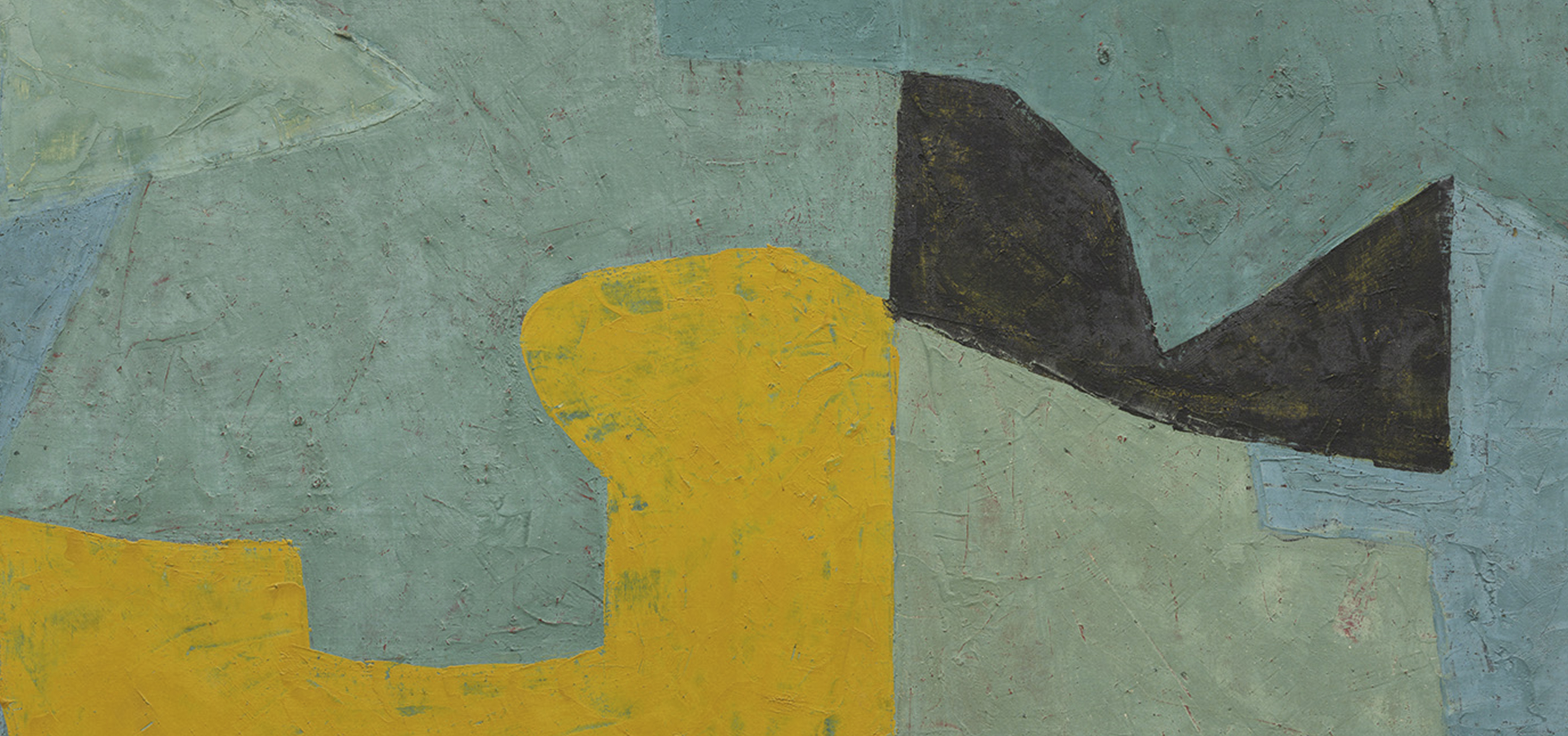
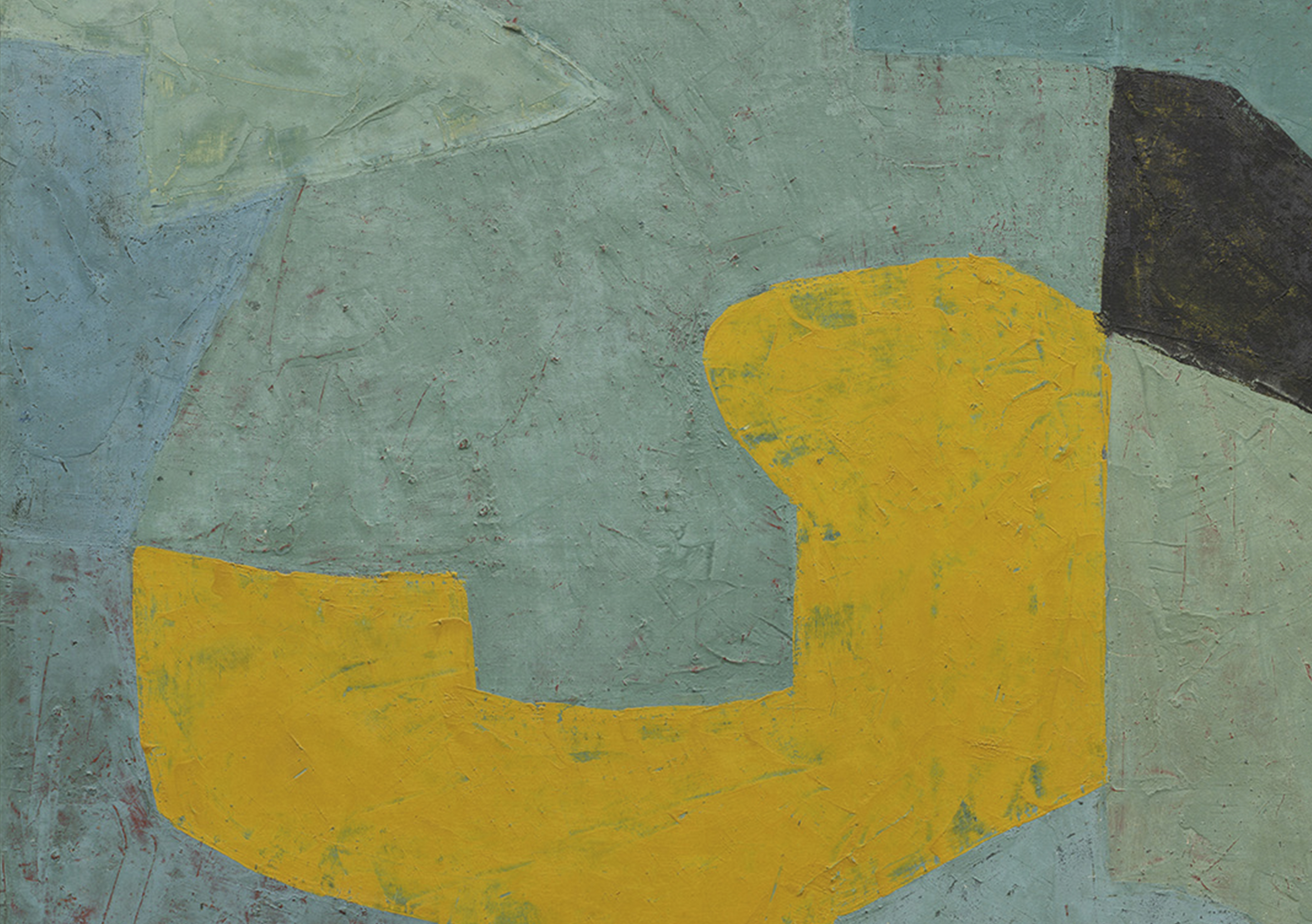
Material plays a central role in his work. Fascinated bu the physical properties of pigments, Poliakoff refuses to buy standardized paints in tubes. He grinds his own pigments and adjusts his mediums to achieve the exact shade required for his composition. He deliberately limited palette forces him to create all chromatic variations through layering. Methodically applied in successive layers, the color sometimes allows the underlying hue to show through, or reveals itself through subtle irregularities in the material. “Even if there is no color, a painting in which the material vibrates remains alive.”, he asserted.
Against a background composed of subtle shades of blue, two polygones stand out drawing the viewer’s attention towards the center of the canvas. The meeting of colors no longer produces sharp contrasts, but rather delicate, resonant interactions, suggesting an internal vibration within the canvas. The pictorial surface is never smooth: it is animated by variations and internal tensions between warm and cool colors and between opaque and translucent materials.
Thanks to these vibrations, pigments such as the red, that line the background of the work seem to rise to the surface. The colors spread beyond the frame and thus become the true subject of the work. This approach is sometimes reminiscent of Mark Rothko’s Color Fields, inviting the viewer to engage in silent spiritual contemplation before the painting.
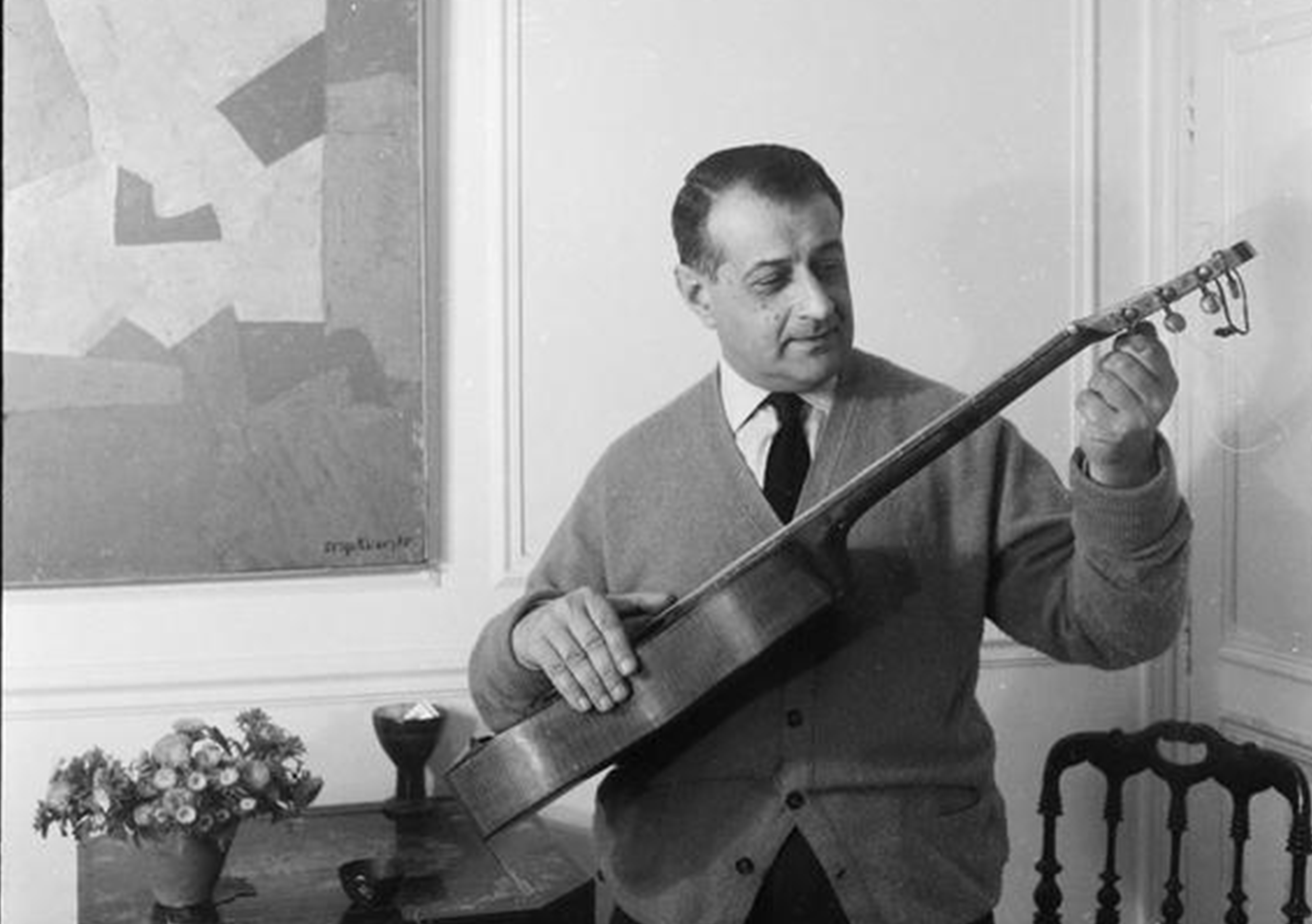
Poliakoff’s colorful canvases are based on the principle of resonance: “I love all colors. I never think about which color I’ll use. The most important thing is resonance. The light has to be there.” The influence of music, ever-present in his life, is evident in the way he explores similar compositional patterns and assembles closely related chromatic scales in ever-changing configurations.
From one canvas to the next, the forms interlock and interweave to create a true symphony of shapes and colors.
Serge Poliakoff (1900-1969)
Sans titre (untitled), 1955
Oil on canvas
81 x 100 cm | 31 7/8 x 39 5/16 inches
Signed “Serge Poliakoff” on the lower right.
Serge Poliakoff
Serge Poliakoff
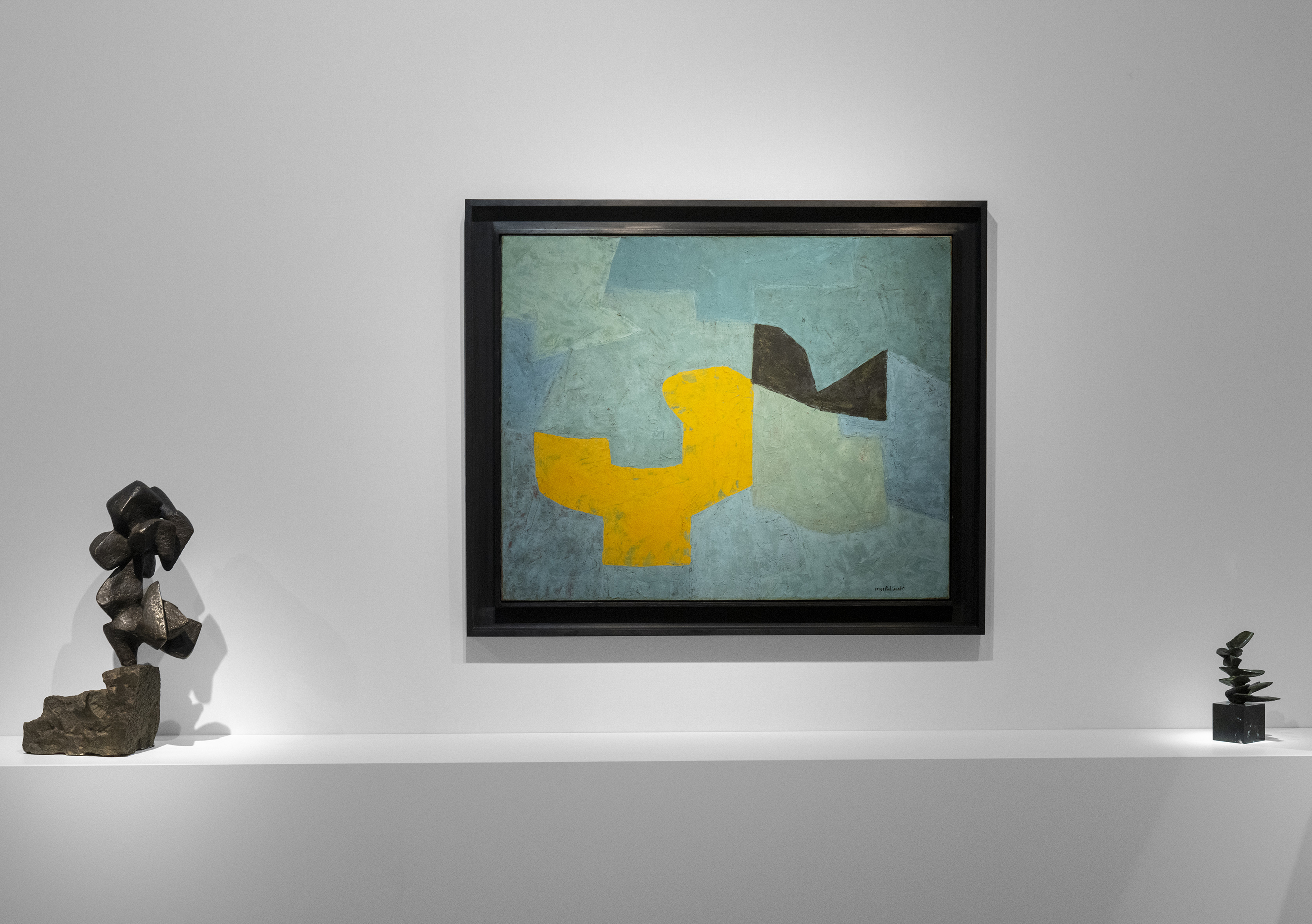
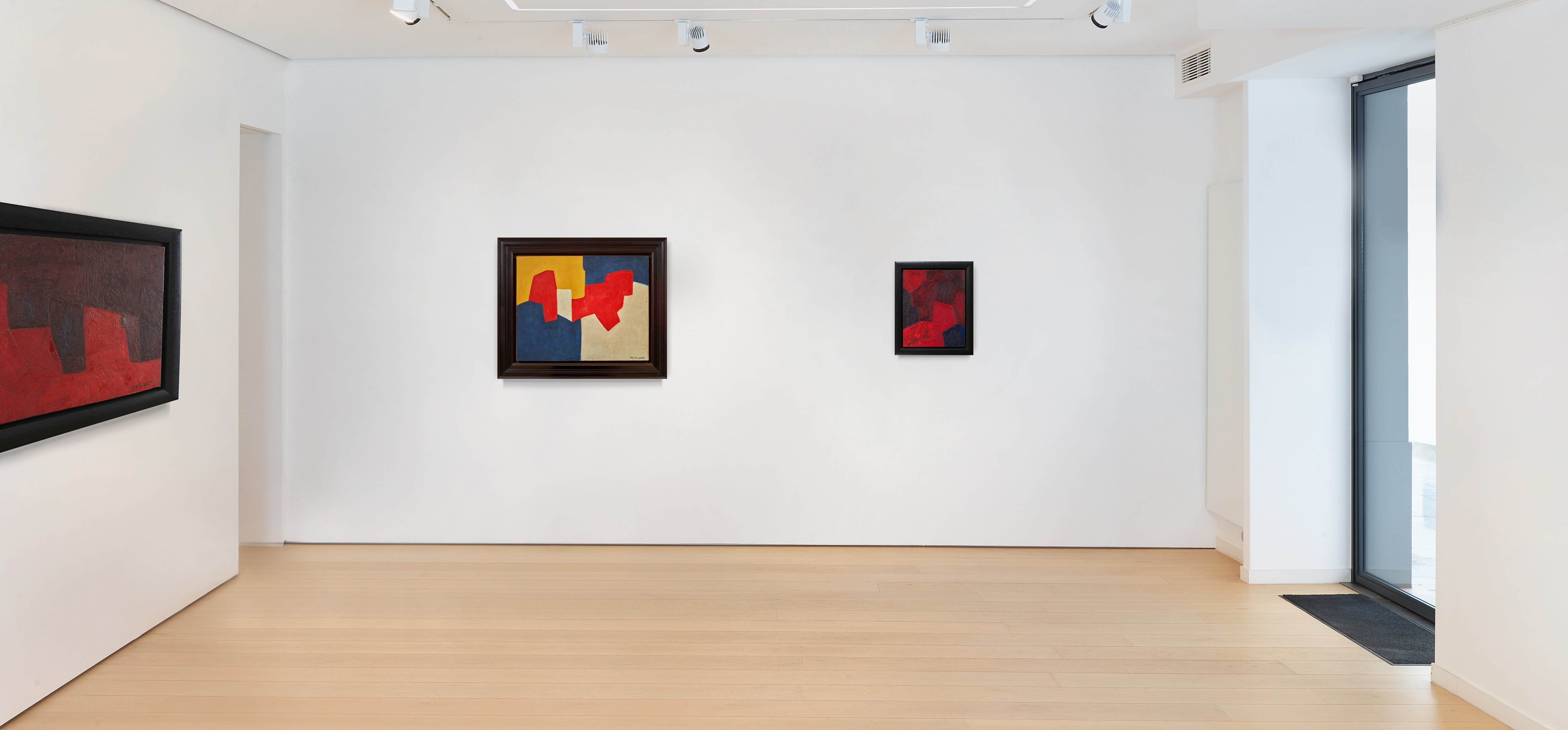
In situ at BRAFA 2026. Poliakoff, Sans titre, 1955 next to Penalba, Etincelle n°3, 1958 and Sans titre F from Ailée series, 1977
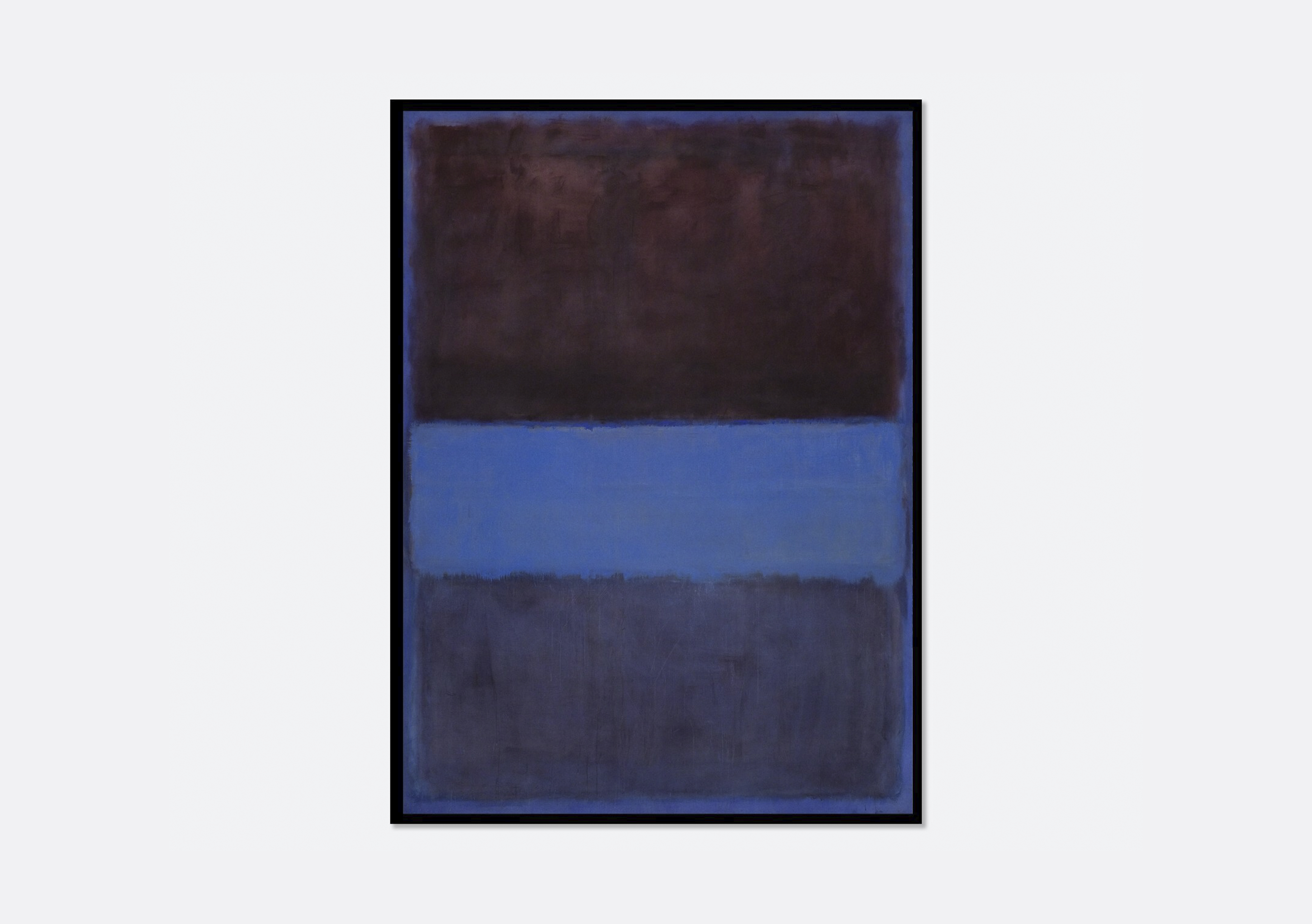
Mark Rothko, No 61 (Rust and Blue), 1953, oil on canvas, Museum of Contemporary Art Los Angeles
About the artist
Born in Russia, painter Serge Poliakoff was one of the major figures of the School of Paris, to whom we owe a renewal of abstraction in the post-war period. His compositions, composed of interlocking free shapes and superimposed large coloured areas, reflect his research on the intensity of colour, the balance of construction, and the effects of the vibration and transparency of matter; “Transparency gives life,” the artist said. Over the course of more than three decades of work dedicated to pure abstraction, Poliakoff explored on numerous mediums: canvases, papers, lithographs, or even theater sets.