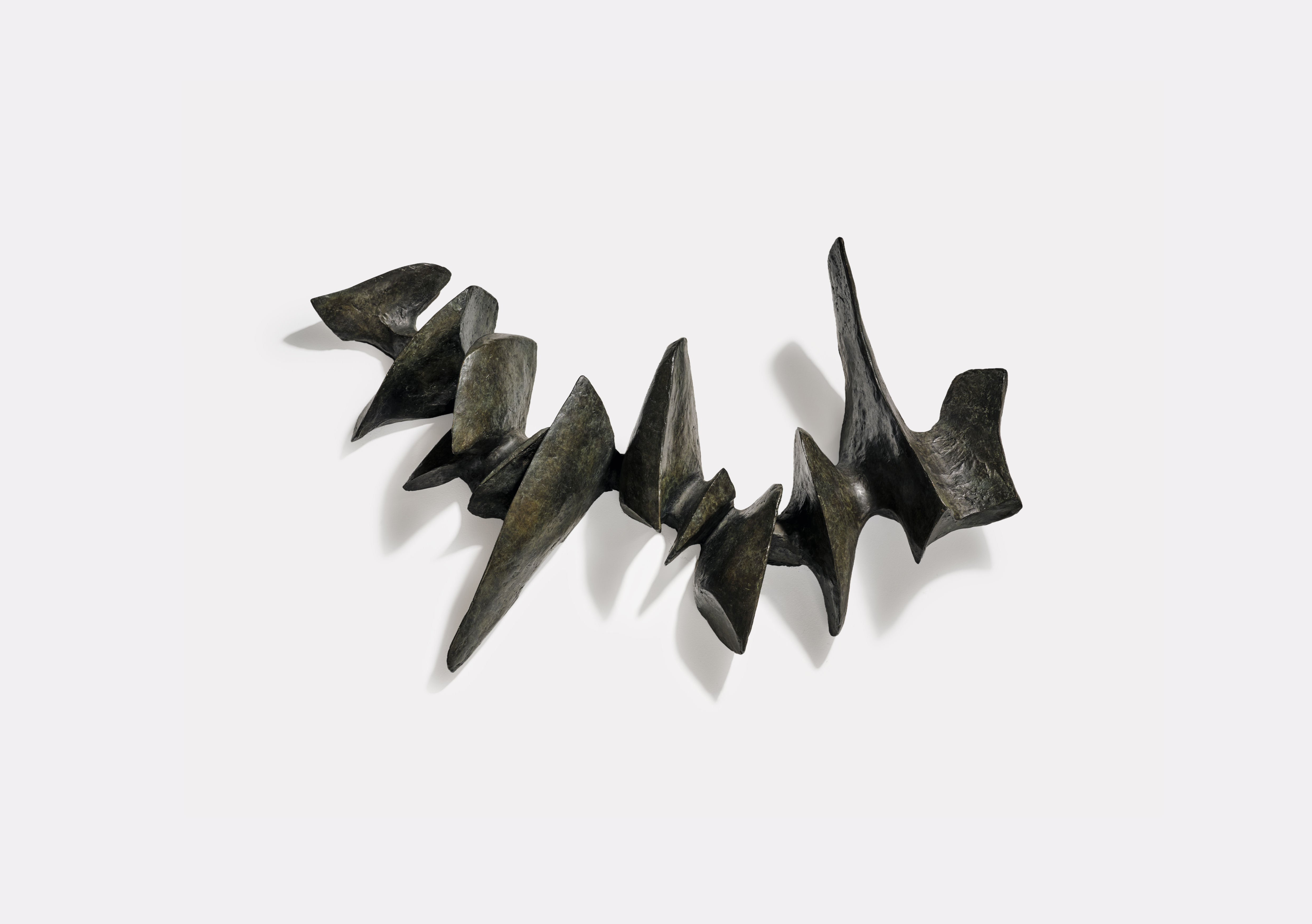
“For me, it is essential to have a thorough understanding of the site and its atmosphere […]
I designed highly lyrical forms to break away from the rather similar and symmetrical walls.”
Alicia Penalba
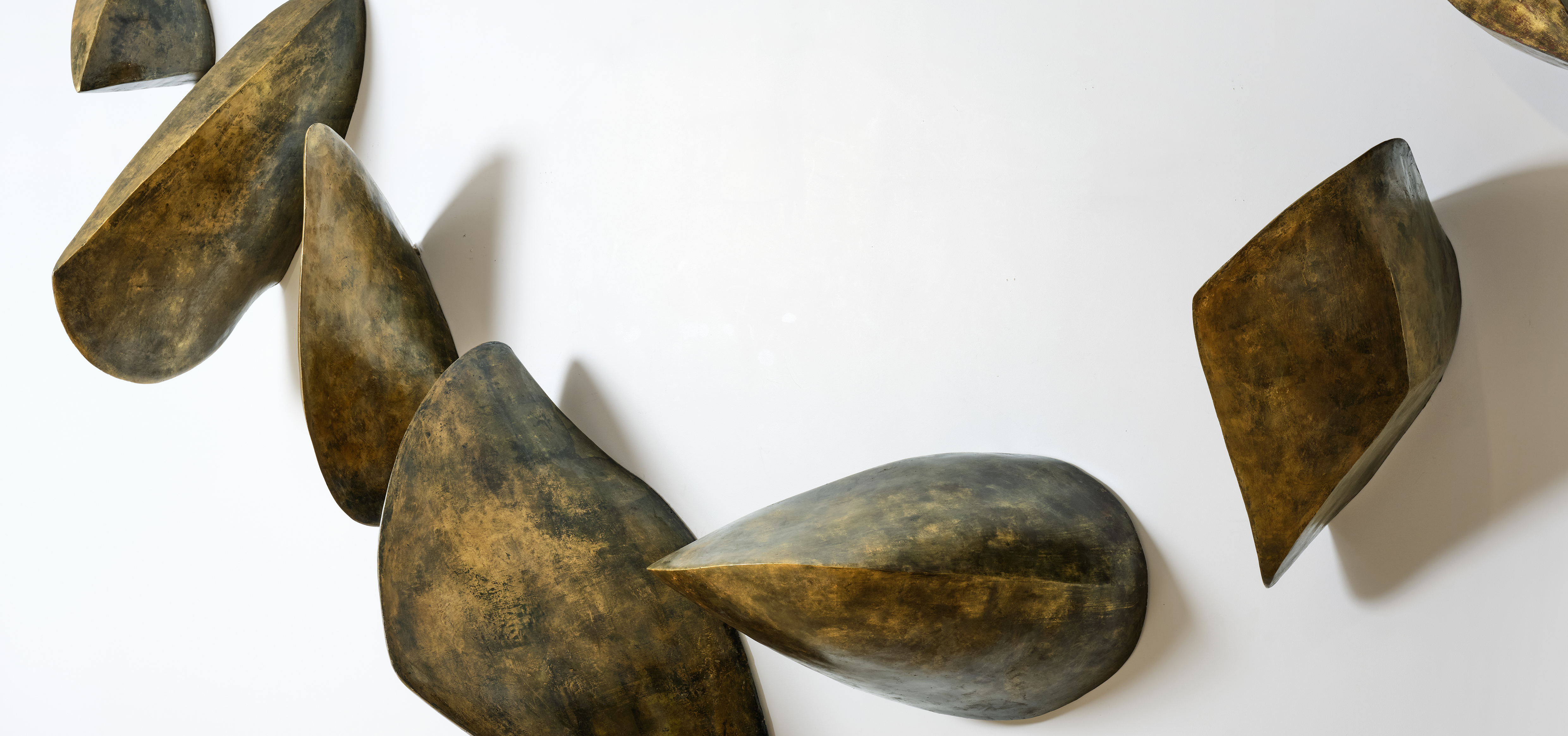
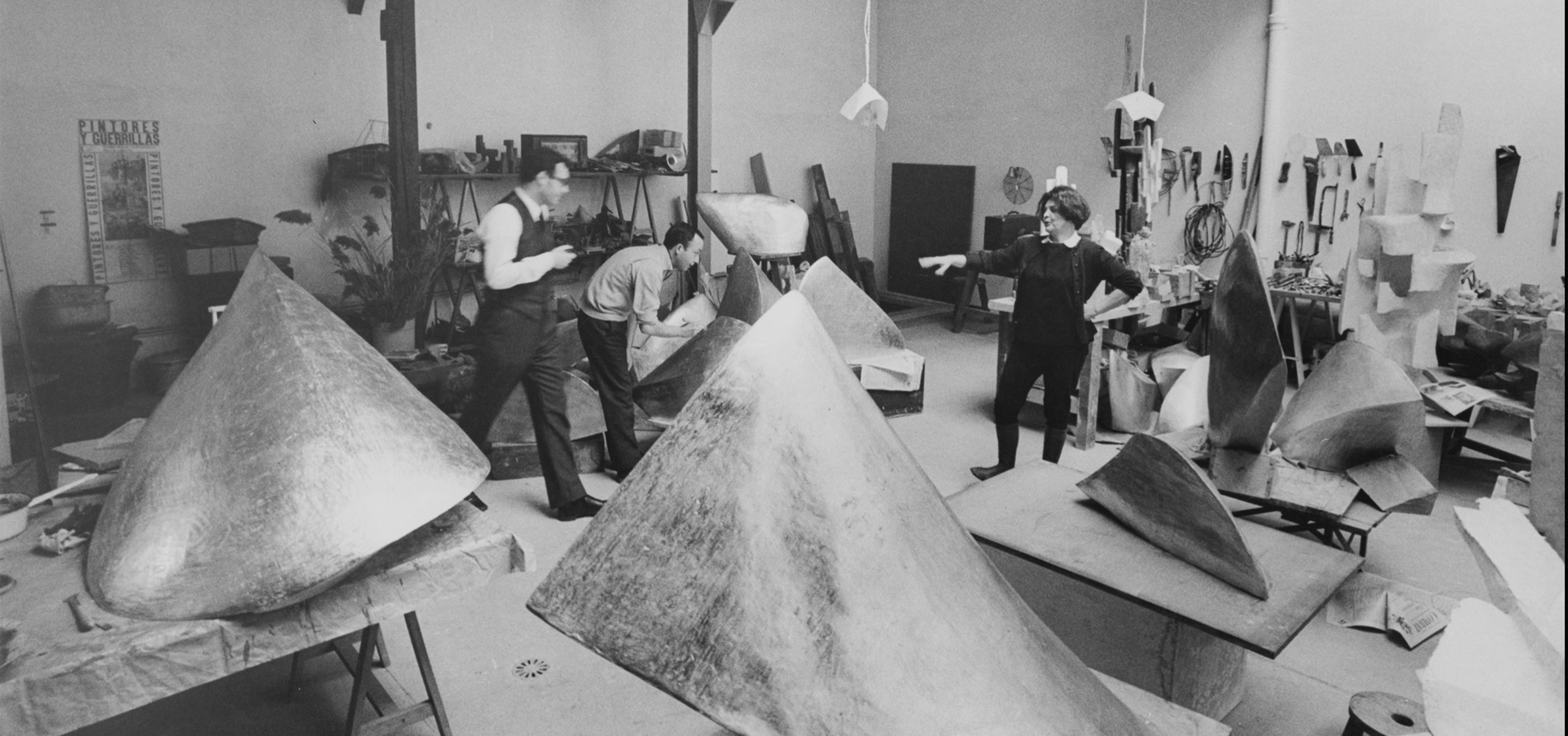
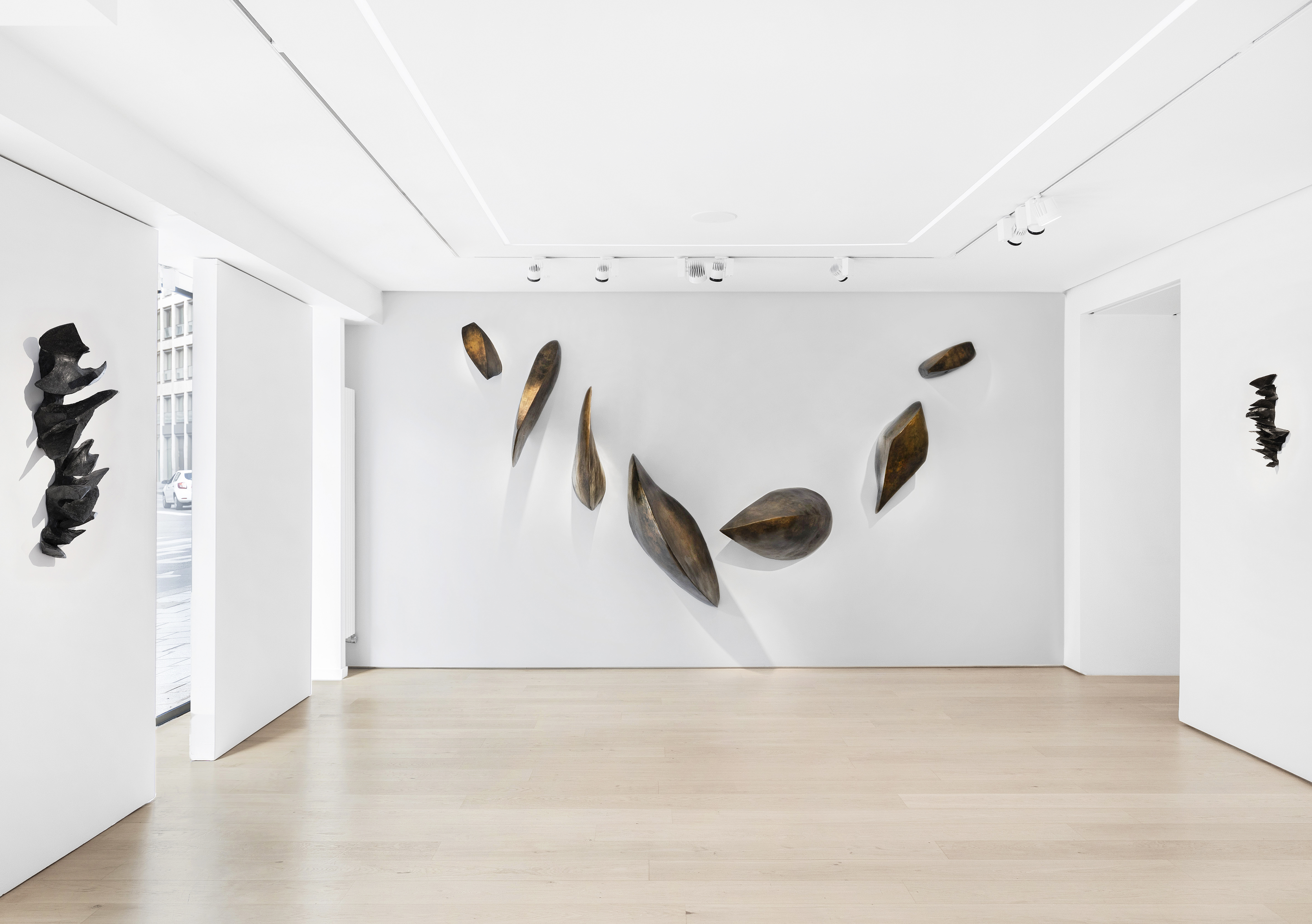
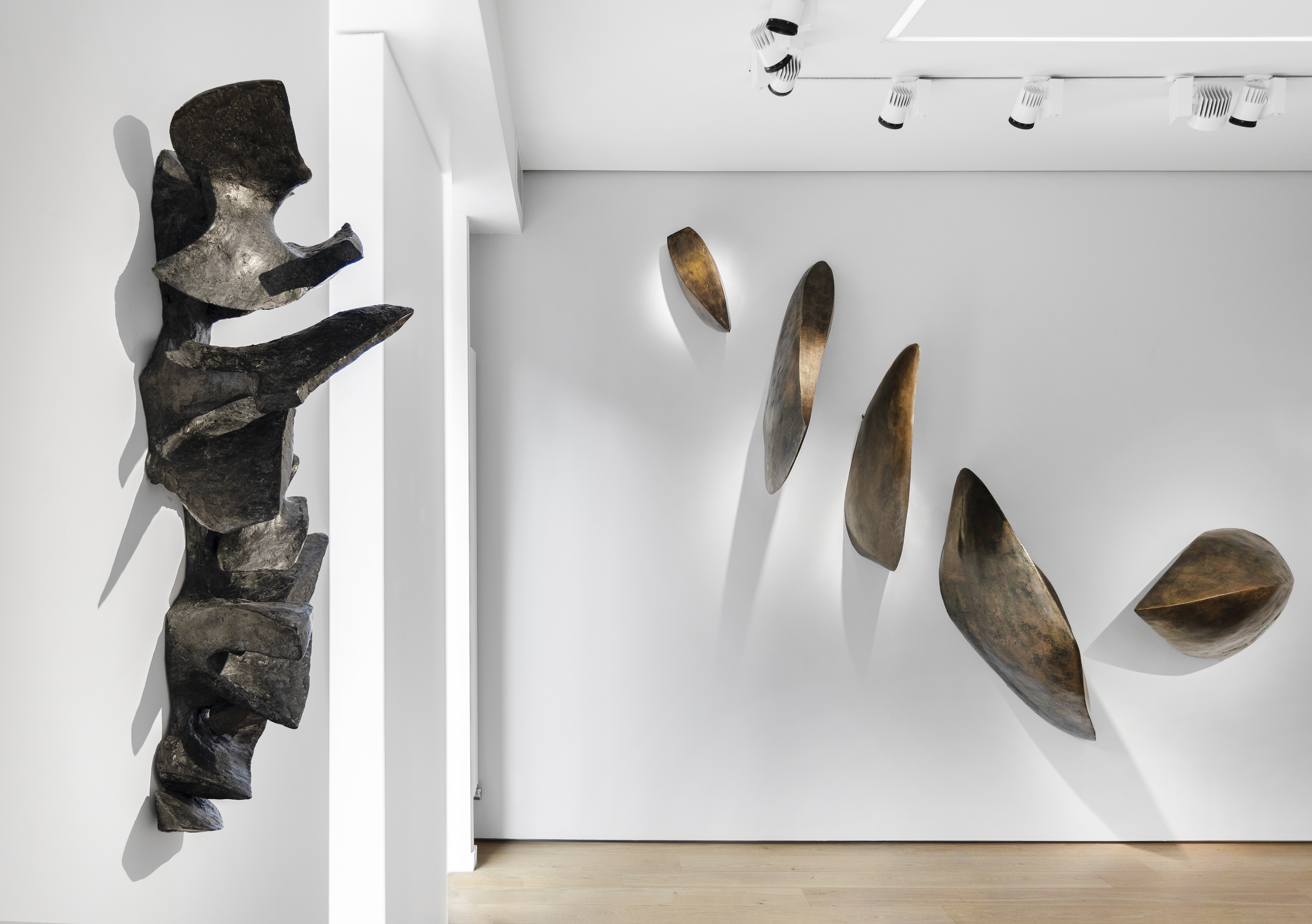
This unprecedented exhibition, presented by the A&R Fleury Gallery this spring, brings together the majority of Alicia Penalba’s mural sculptures. The centerpiece and namesake of the exhibition, Formes volantes represents the culmination of the artist’s mural work. Commissioned by Saint-Gobain to demonstrate the strength of their new invention, Securit© glass, it was installed on either side of a vast wall made of this material. The work consists of a series of petals and conical shapes that extend across the wall in harmony with the surrounding architecture. It was important to the artist that the work adapt to the specific characteristics of the space it occupied. (See the selection on Formes volantes for a history and detailed analysis of this work.)
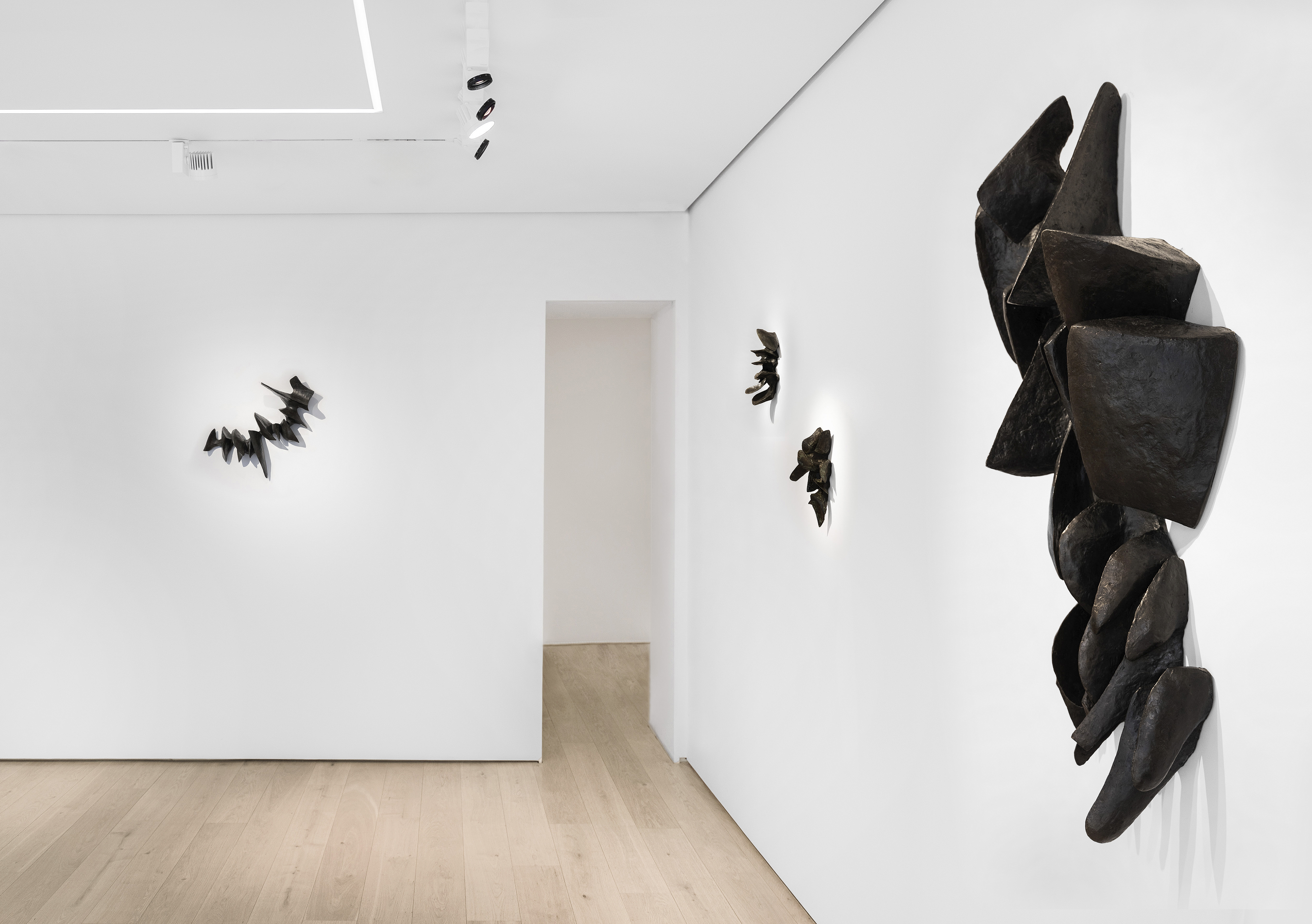
The exhibition thus presents a striking dialogue between the artist’s early mural works from the late 1950s, such as Les Amants multiples, and her creations from the 1960s, a particularly prolific decade for her. These years mark the moment when Penalba opened up her forms to let light in, freeing the volumes from their heaviness and transforming the wall into a field of spatial expansion. Penalba thus continues to explore the issues she had addressed as early as the late 1950s: how to activate space without completely annexing it? How to place sculpture in a dynamic relationship with the viewer’s perception and body? The mural sculptures extend these central reflections in Penalba’s work, where she transforms the wall into an active and dynamic space.
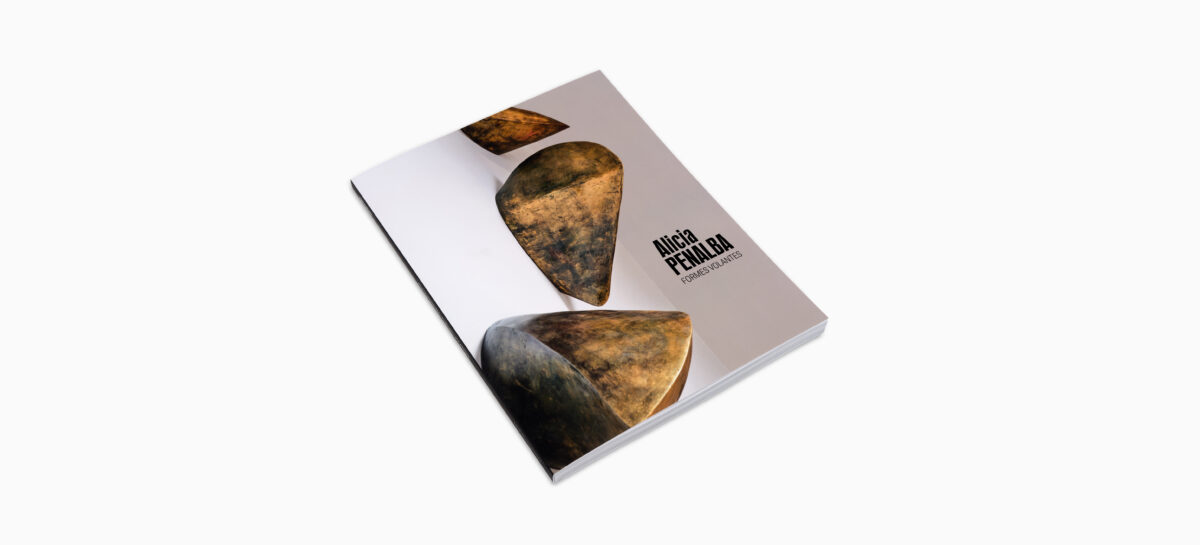
Thanks to a special relationship with the artist’s estate in Argentina, most of the works on display come directly from her personal collection. Thanks to extensive archival research, the gallery has also been able to publish a catalog accompanying the exhibition, featuring period photographs of each sculpture, as well as a text by Victoria Giraudo, curator of the major retrospective dedicated to the artist at MALBA in Argentina in 2016.
Alicia Penalba
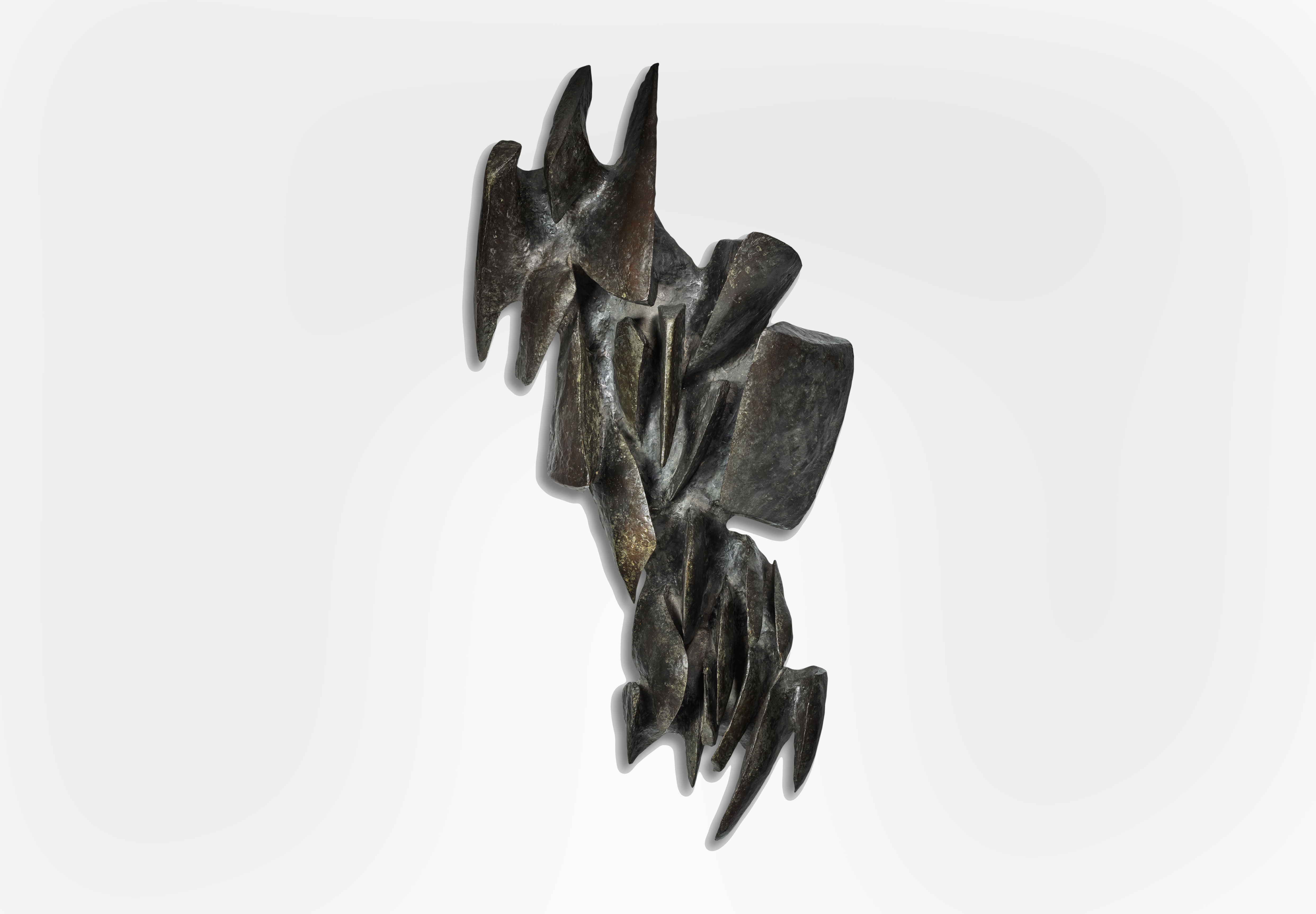
Les Amants multiples, 1955-56. Bronze | 120 x 58 x 24,5 cm | 47 3/16 x 22 13/16 x 9 5/8 in.
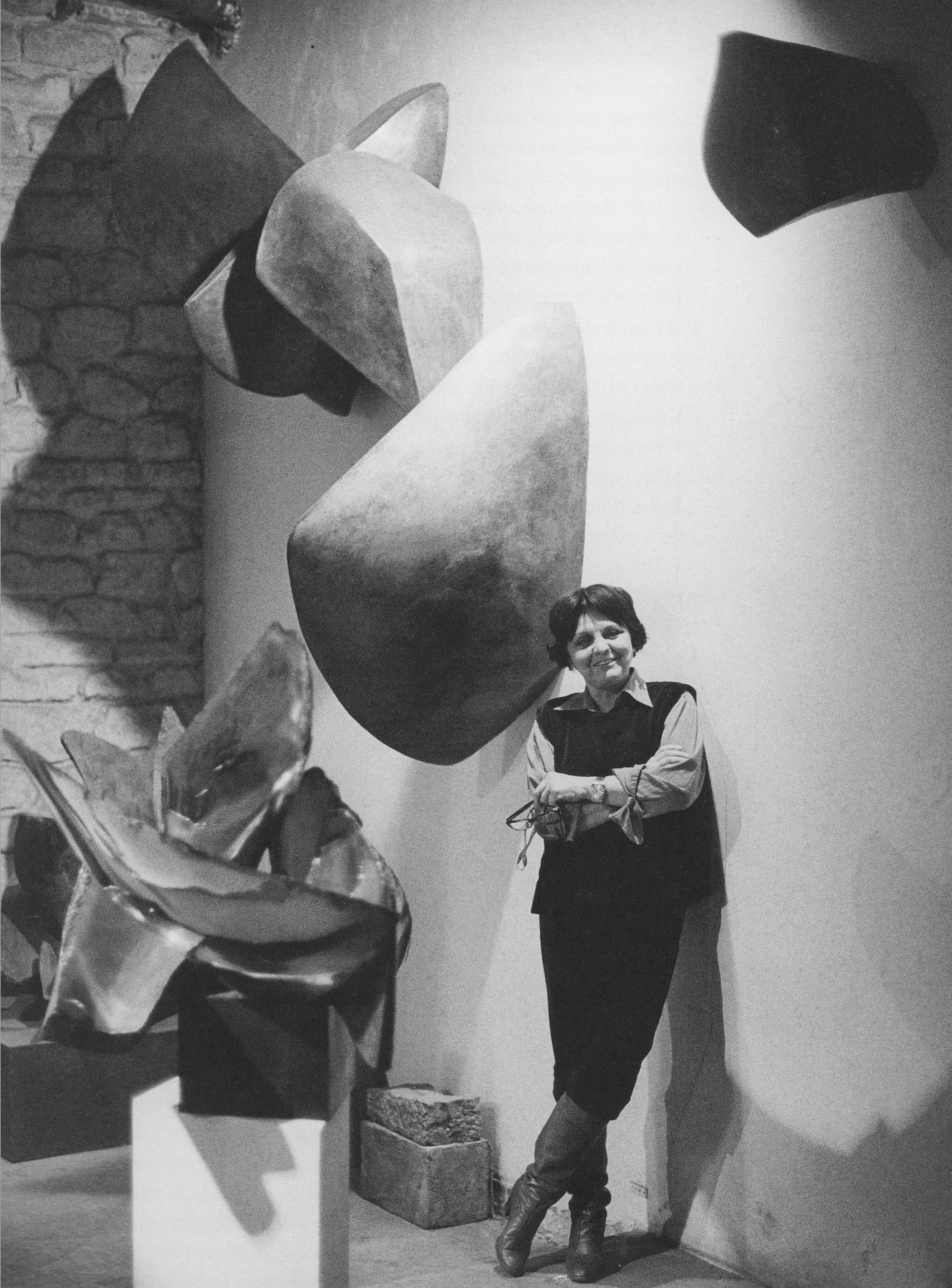
Alicia Penalba in her studio in front of some elements of Formes volantes
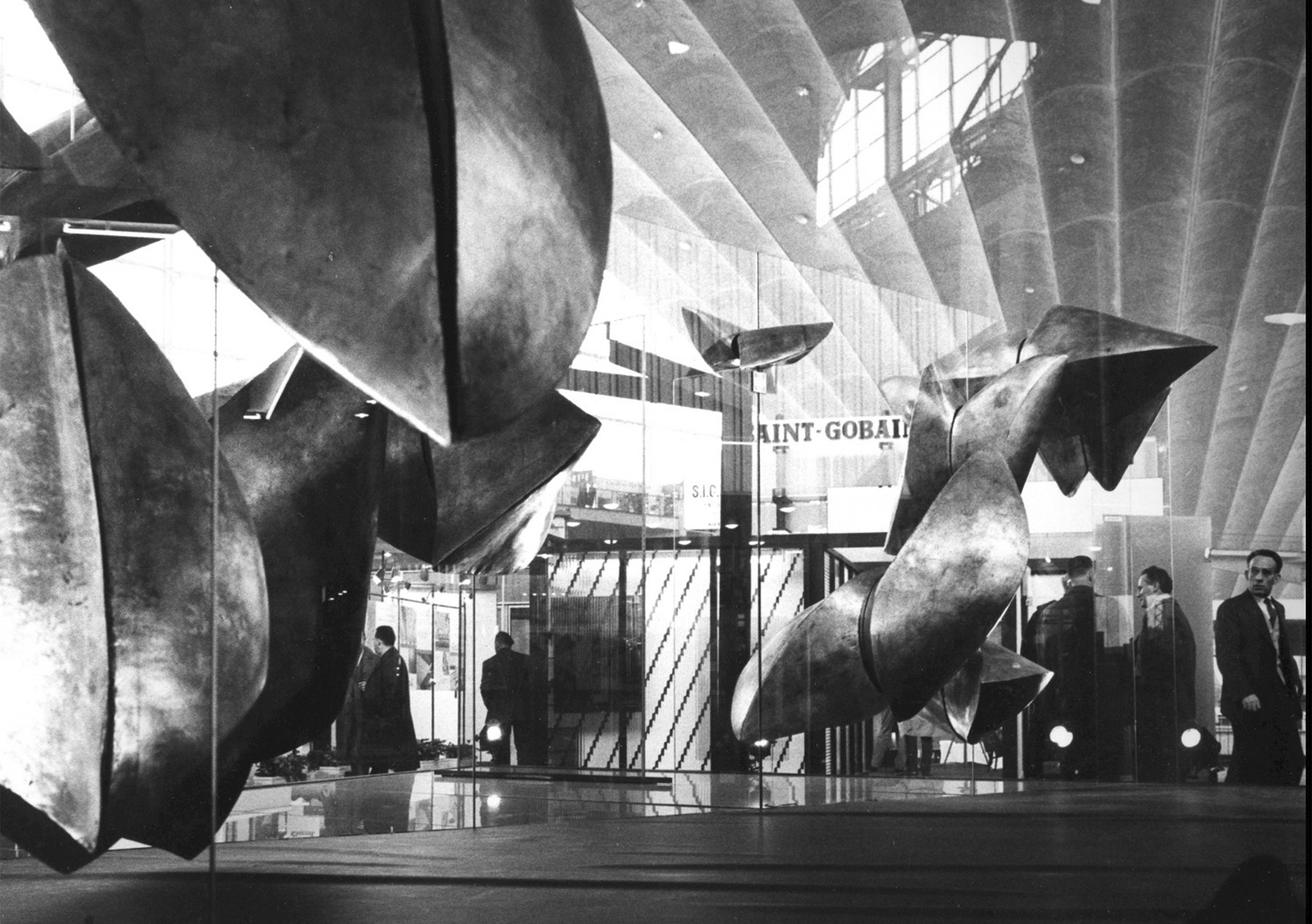
Formes volantes for the Saint-Gobain booth at the CNIT Expomat, 1960. ©Galerie A&R Fleury
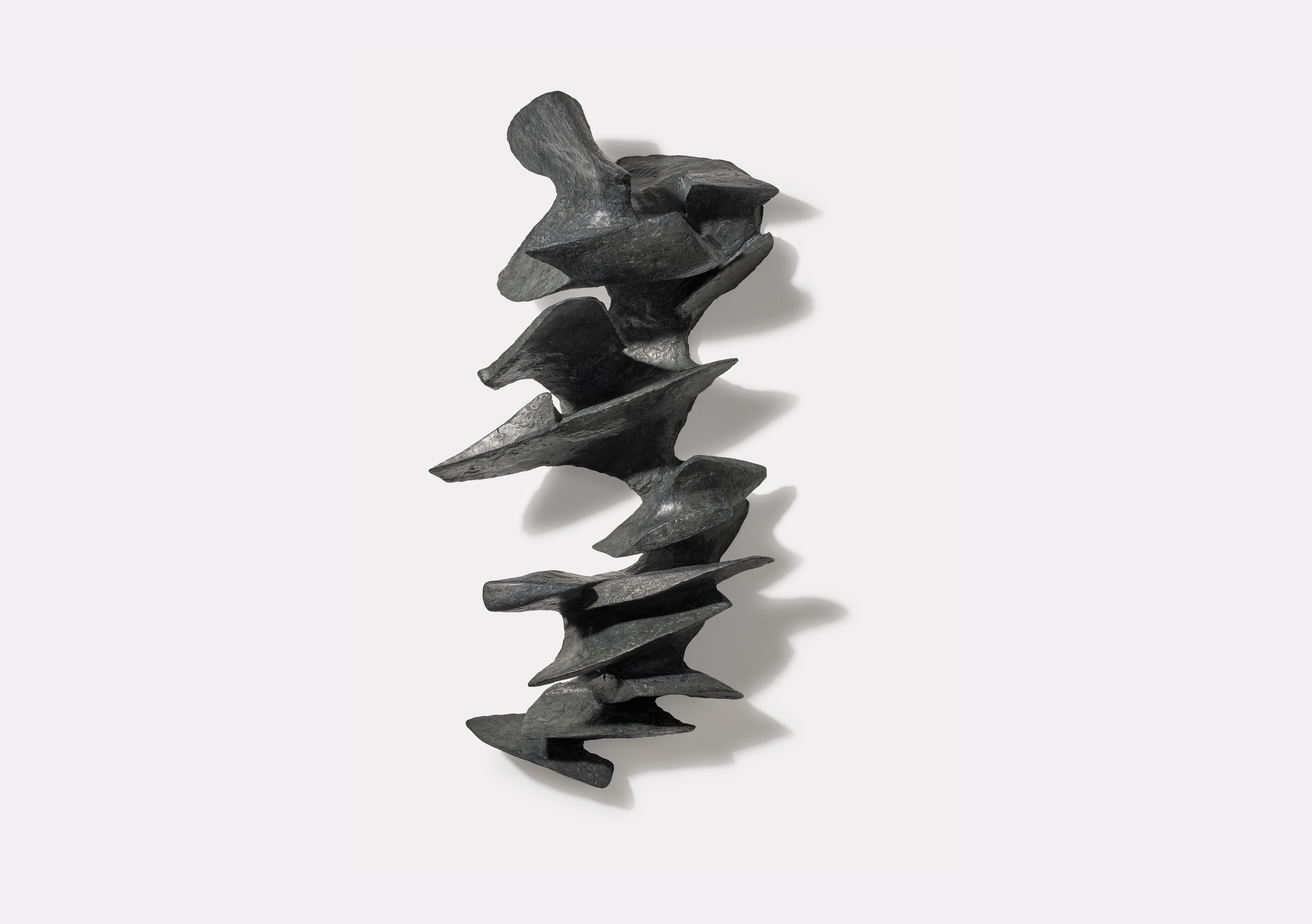
Maléfice du mur, 1961-1962
Bronze, mural sculpture
85 x 41 x 27 | 33 7/16 x 16 1/8 x 10 5/8 inches
1962
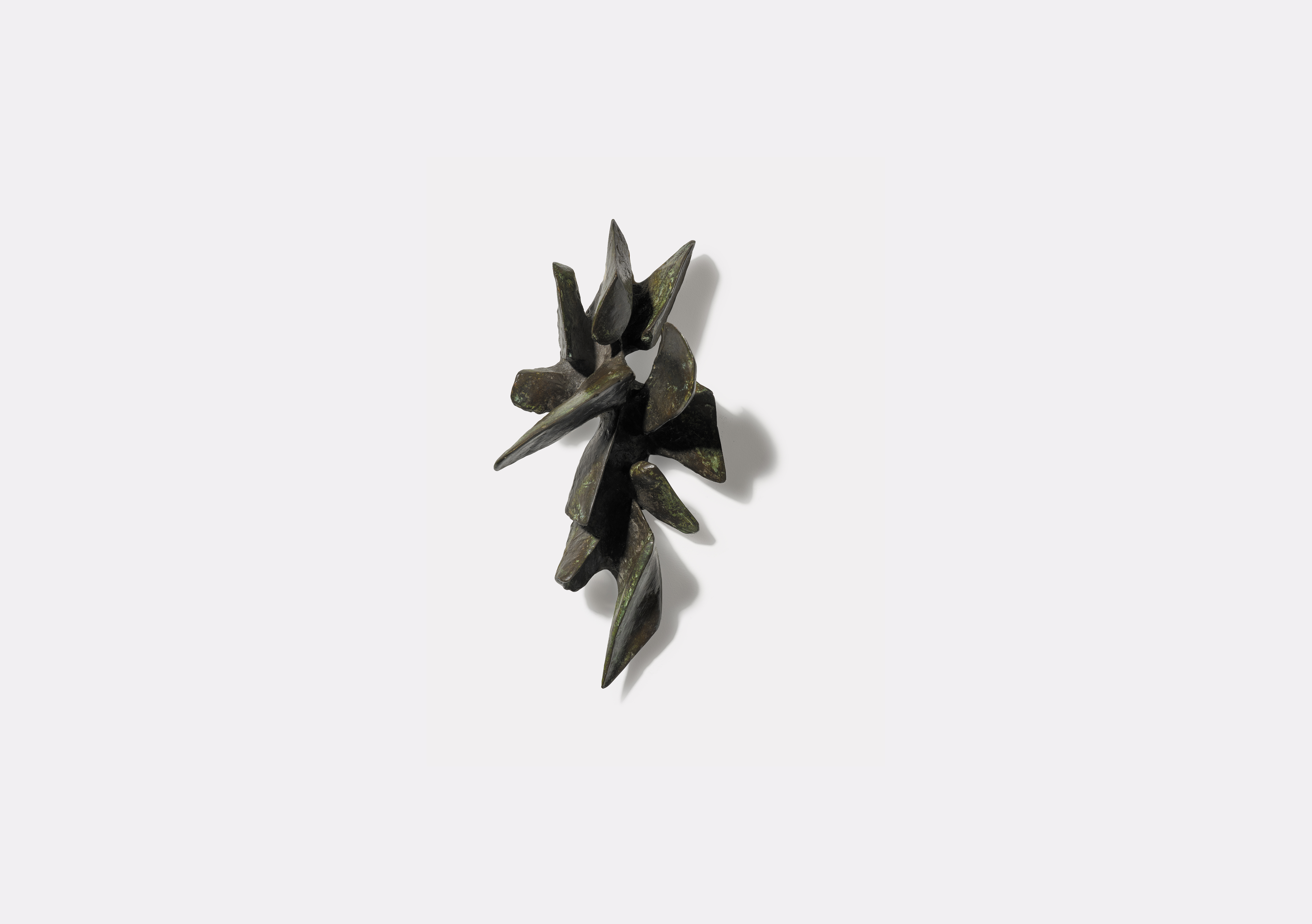
1962
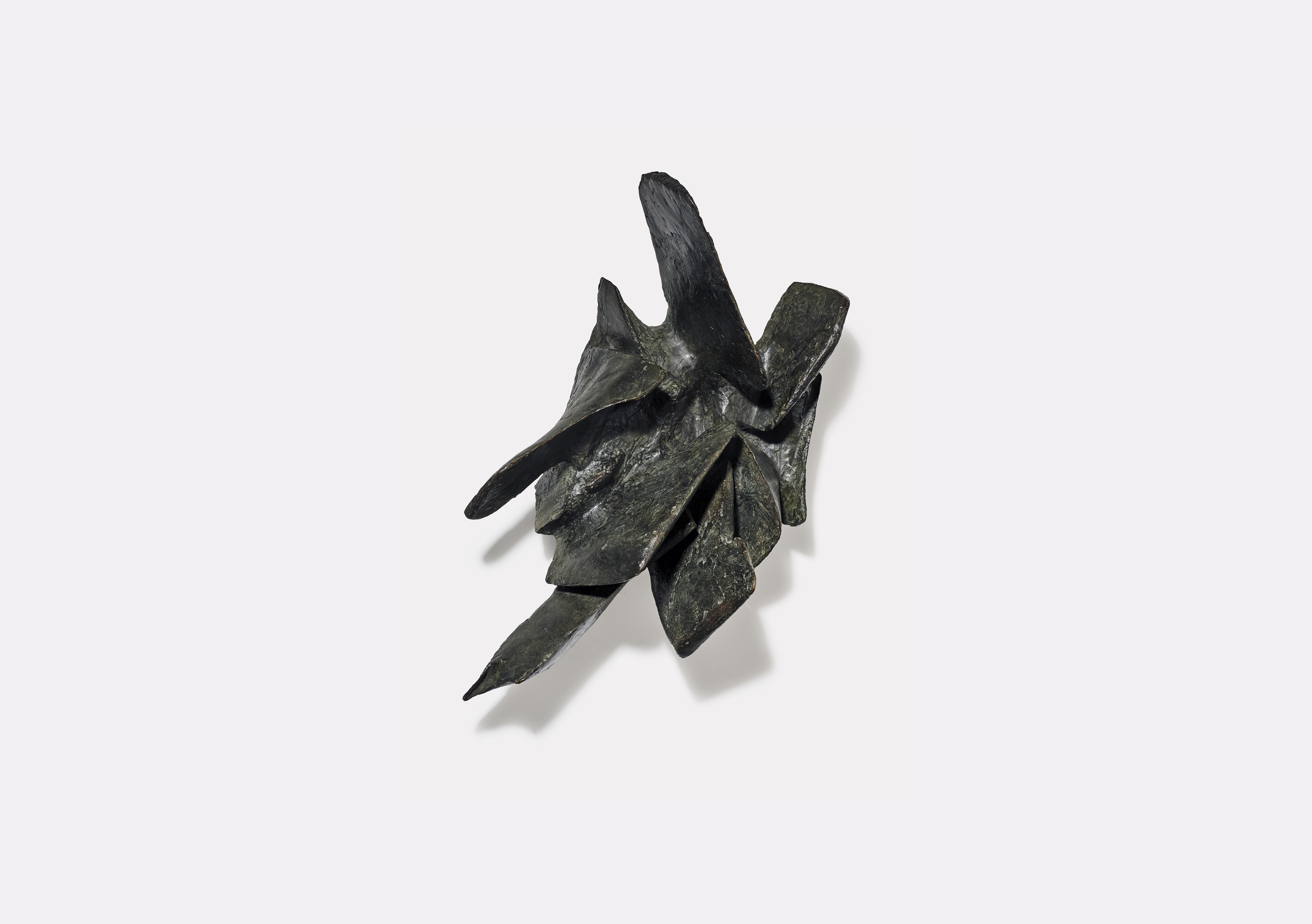
Incantatoire, 1961
Bronze, mural sculpture
70 x 40 x 15 cm | 27 1/2 x 15 11/16 x 5 7/8 inches